
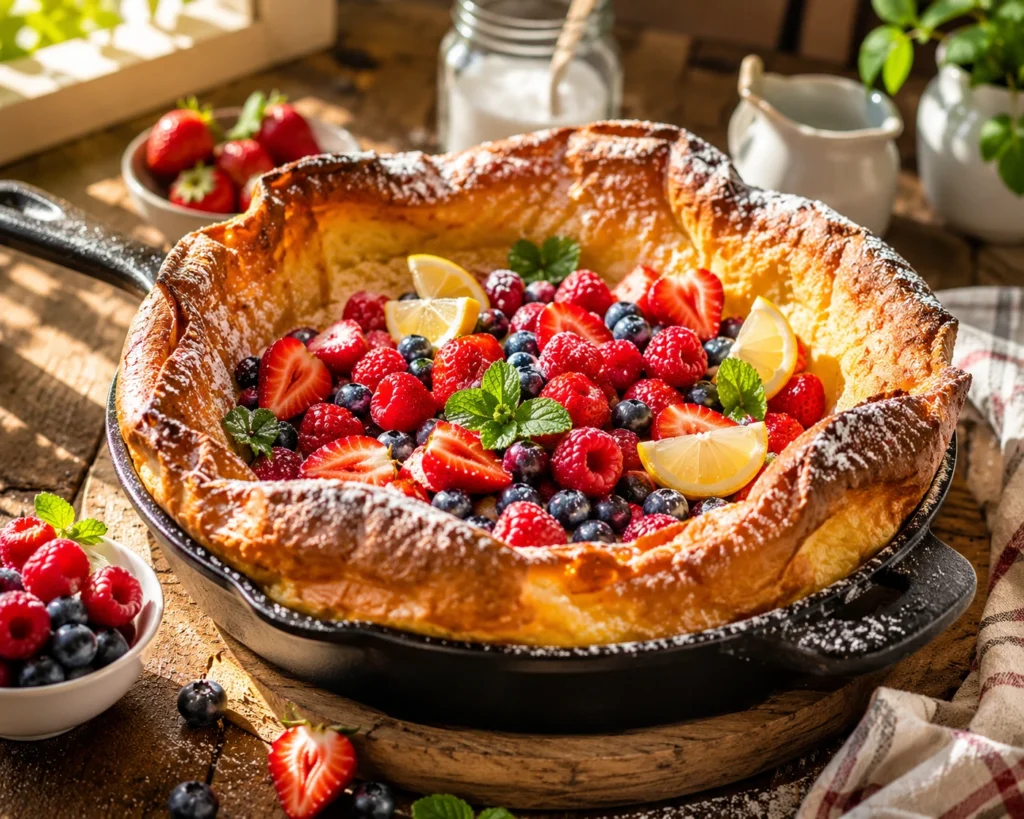
The first time I pulled a hot Dutch baby out of my oven, I stood in my kitchen completely mesmerized. Watching a simple, thin batter swell into a dramatic, golden-brown crown with billowing edges that tower over the sides of a cast iron skillet feels like pure kitchen magic.
Despite its name, a Dutch baby is actually a derivative of the classic German pancake (Pfannkuchen). The name “Dutch baby” was coined in the early 1900s by Victor Manca, the owner of Manca’s Cafe in Seattle, who mispronounced Deutsch (German) as “Dutch.” While traditional American pancakes are cooked individually on a flat stovetop griddle, a Dutch baby is baked whole in a piping-hot oven.
The result is a showstopping hybrid of a popover, a crepe, and a French souffle. It boasts paper-thin, crispy, caramelized rims that hug a soft, custard-like center. In this guide, I am sharing my tested 30-minute recipe alongside the exact scientific tricks I use to get the tallest, airiest rise every single time you bake.
Why You’ll Love This Dutch Baby Recipe
- Crispy Golden Edges: The scorching hot skillet creates a deep, caramelized crunch along the rim that contrasts beautifully with the tender interior.
- Light and Fluffy Center: The interior remains delightfully soft, airy, and rich without feeling heavy.
- Simple Pantry Staples: You only need 6 basic ingredients—eggs, milk, flour, butter, salt, and vanilla—that are likely sitting in your kitchen right now.
- Ready in 30 Minutes: Takes just 5 minutes of active preparation time in a blender, letting your oven do all the heavy lifting.
- The Ultimate Brunch Centerpiece: Its towering structure makes a dramatic presentation when brought straight from the oven to the breakfast table.
- Beginner Friendly: No tedious flipping required! Simply pour the batter into the hot pan and let it bake.
- Sweet or Savory Adaptability: Tastes just as delicious with maple syrup and berries as it does with melted Gruyère, smoked bacon, and fresh herbs.
- One-Pan Cleanup: Everything bakes inside a single cast iron skillet, keeping post-breakfast dishes to a absolute minimum.
Recipe Card
- Prep Time: 5 minutes
- Cook Time: 20 minutes
- Total Time: 25 minutes
- Servings: 4 servings
- Calories: 220 kcal per serving
- Course: Breakfast / Brunch
- Cuisine: German-American
- Author: DishFry Culinary Team
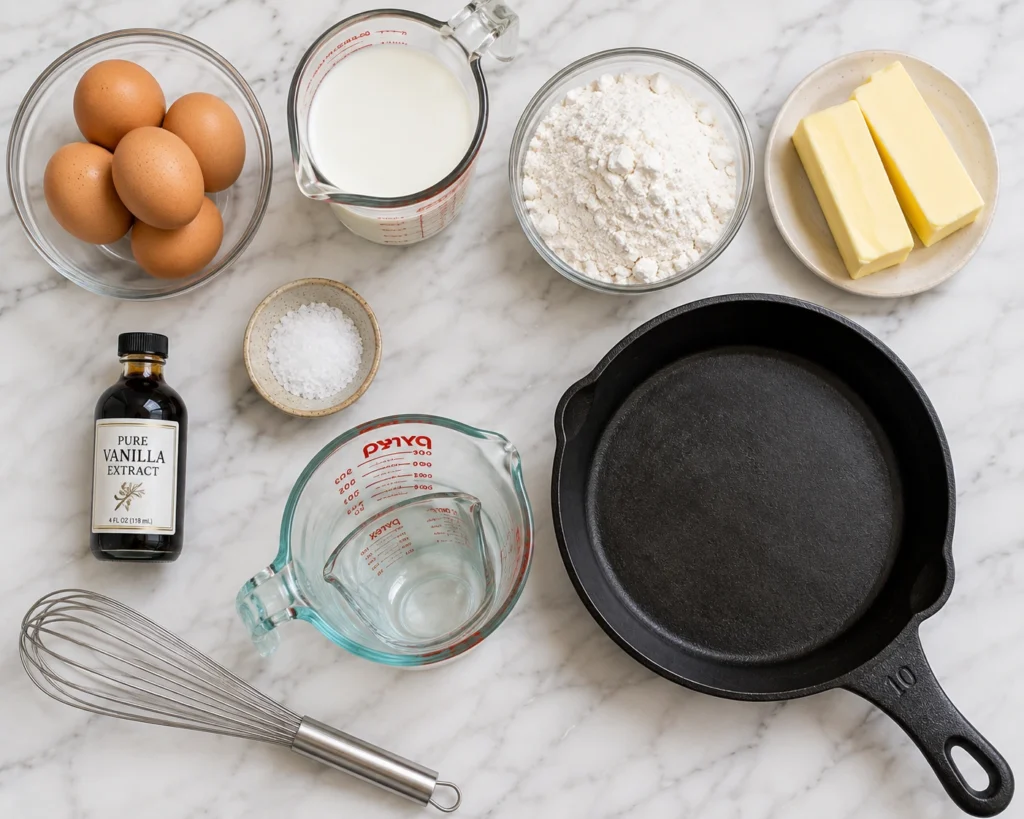
Dutch Baby Recipe Ingredients
Main Ingredients
- 3 large eggs, room temperature
- ½ cup whole milk, room temperature
- ½ cup all-purpose flour, sifted
- 1 tablespoon granulated sugar (optional, for sweet pancakes)
- 1 teaspoon pure vanilla extract
- ¼ teaspoon fine sea salt
- 3 tablespoons unsalted butter
Ingredient Notes
To achieve maximum rise and a light, non-rubbery texture, each component must meet precise temperature and structural standards:
- Room-Temperature Eggs: Cold eggs from the fridge will chill your batter and trap the steam, leading to a flat pancake. Room-temperature eggs trap air effortlessly when blended, causing the batter to expand rapidly when hit with heat.
- Whole Milk: High fat content is essential for creating a delicate, custard-like crumb in the center. Avoid skim or low-fat milks, as their higher water content can make the pancake soggy rather than tender.
- Butter for Crispy Edges: Unsalted butter acts as both a flavor enhancer and a heat conductor. As the butter melts and sizzles in the hot skillet, it roasts the bottom and sides of the batter, creating those signature golden, crispy rims.
- All-Purpose Flour: Standard all-purpose flour provides just enough gluten to form the walls that hold the trapped steam. Avoid bread flour, which creates a tough texture, or self-rising flour, which alters the balance of the rise.
- Optional Vanilla and Cinnamon: A splash of pure vanilla extract and a dash of ground cinnamon add a warm, cozy aroma that elevates the pancake from basic egg-and-flour to restaurant-quality brunch.
Kitchen Equipment
You don’t need fancy tools to make a classic German pancake, but these items will ensure a stress-free baking process:
- 10-inch to 12-inch Cast Iron Skillet: Cast iron retains heat exceptionally well, transmitting energy directly into the batter to blast it skyward.
- High-Speed Blender or Food Processor: Blending aerates the liquid mixture better than manual whisking, ensuring a silky, lump-free batter.
- Fine Mesh Sieve: Optional, for sifting your flour or dusting finished powdered sugar over the top.
- Measuring Cups and Spoons: For accurate flour-to-liquid ratios.
- Oven Mitts or Silicone Handle Grips: Critical for handling a 425°F (220°C) cast iron handle safely!
How to Make Dutch Baby
Step 1: Preheat the Oven and Skillet
Place your 10-inch cast iron skillet on the middle rack of your oven. Preheat the oven to 425°F (220°C). Allow the skillet to heat inside the oven for at least 15 to 20 minutes so the iron becomes thoroughly saturated with heat.
Step 2: Blend the Batter
While the oven preheats, combine 3 large room-temperature eggs, ½ cup room-temperature whole milk, ½ cup all-purpose flour, 1 tablespoon granulated sugar, 1 teaspoon vanilla extract, and ¼ teaspoon salt in a high-speed blender. Blend on high speed for 30 to 45 seconds until the mixture is light, frothy, and completely smooth. Let the batter rest at room temperature for 10 minutes so the flour hydrates and air bubbles settle slightly.
Step 3: Melt the Butter
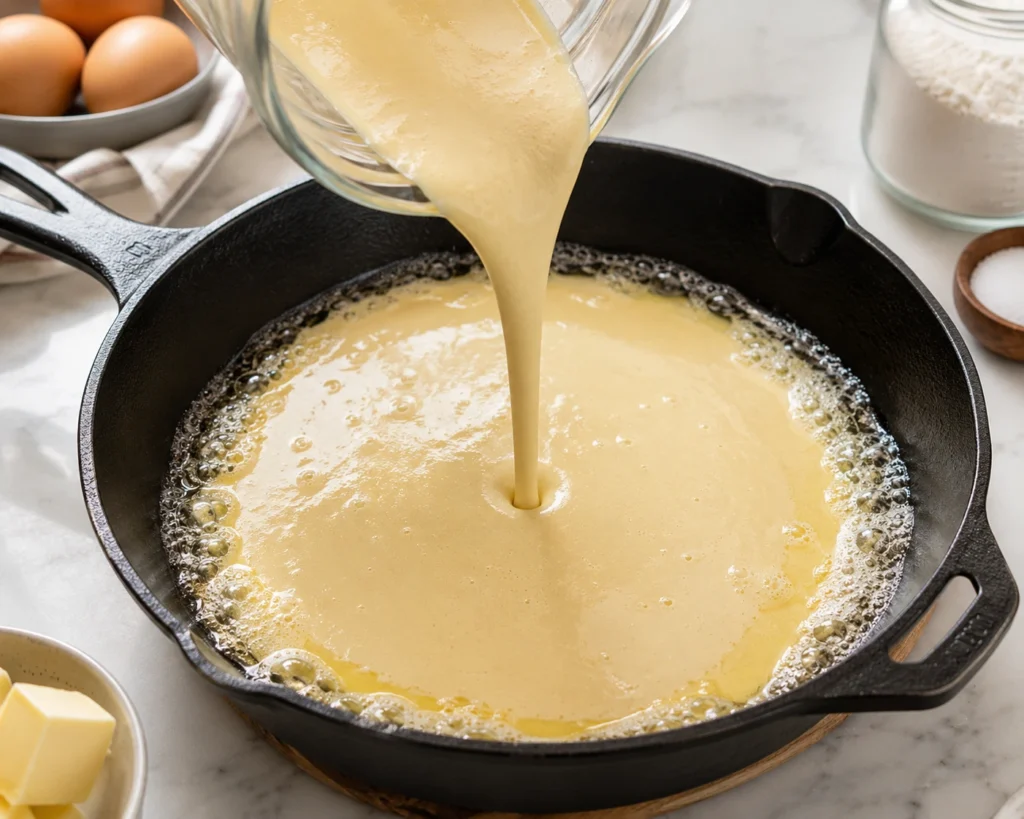
Carefully remove the preheated, hot skillet from the oven using thick oven mitts. Drop 3 tablespoons of unsalted butter directly into the skillet. Swirl the pan carefully until the butter melts completely, coats the bottom, and foams up the sides without burning.
Step 4: Pour the Batter
Immediately pour the blended batter directly into the center of the hot, buttered skillet. Do not stir or spread the batter manually; let it naturally push the liquid butter up toward the edges of the pan.
Step 5: Bake Until Puffed and Golden
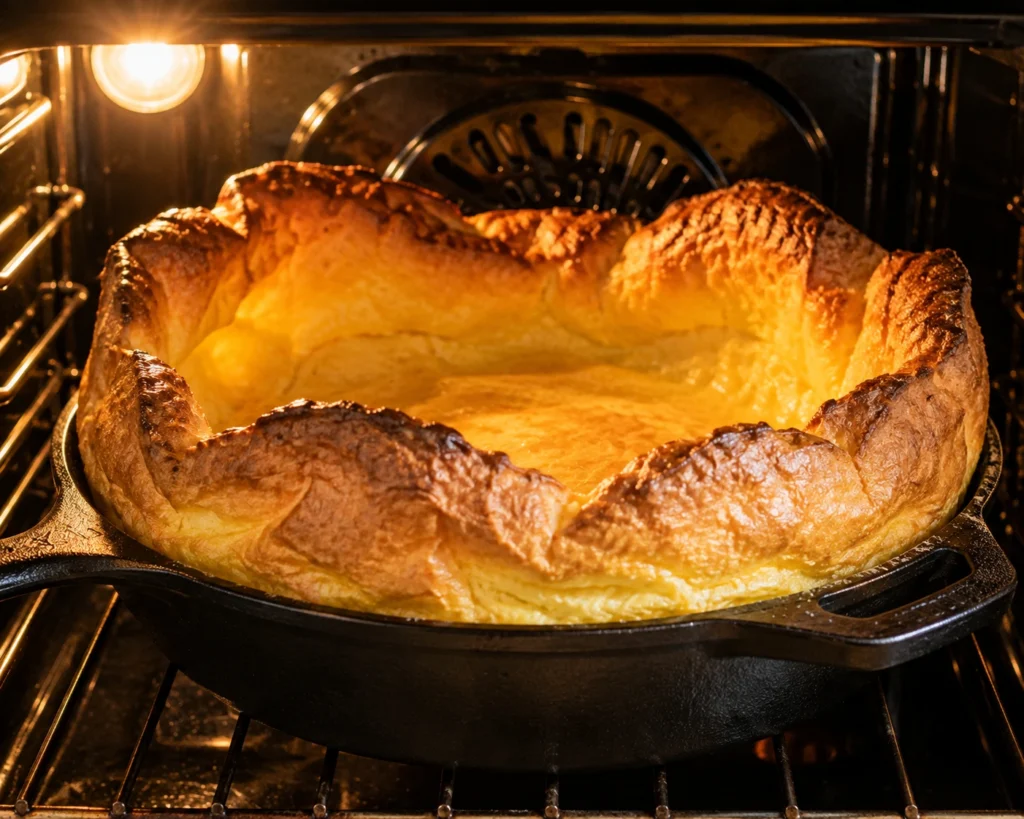
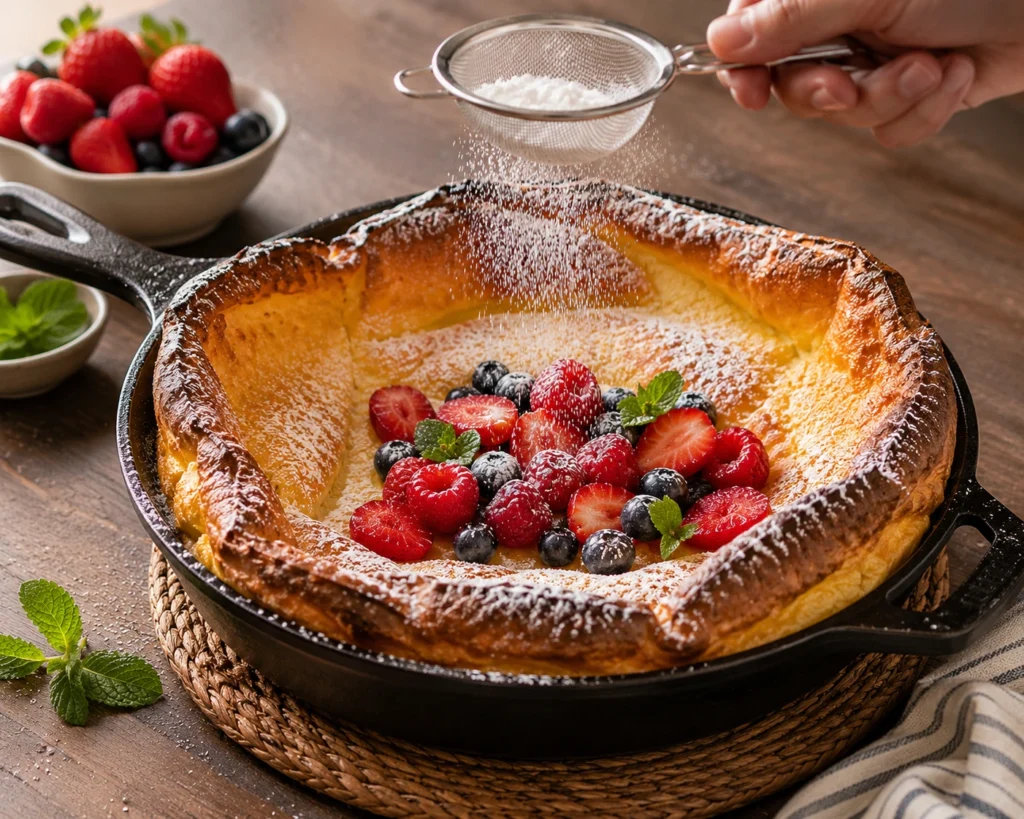
Return the skillet to the middle rack of the oven immediately. Bake at 425°F (220°C) for 18 to 20 minutes without opening the oven door. The pancake will puff up dramatically around the edges, forming high, wavy walls with a deep golden-brown color.
Step 6: Dust and Decorate
Remove the skillet from the oven (remembering the handle is extremely hot!). The center will naturally deflate slightly within a minute, creating a bowl-like well for your toppings. Sift a generous dusting of powdered sugar over the top and squeeze fresh lemon juice over the hot surface.
Step 7: Slice and Serve
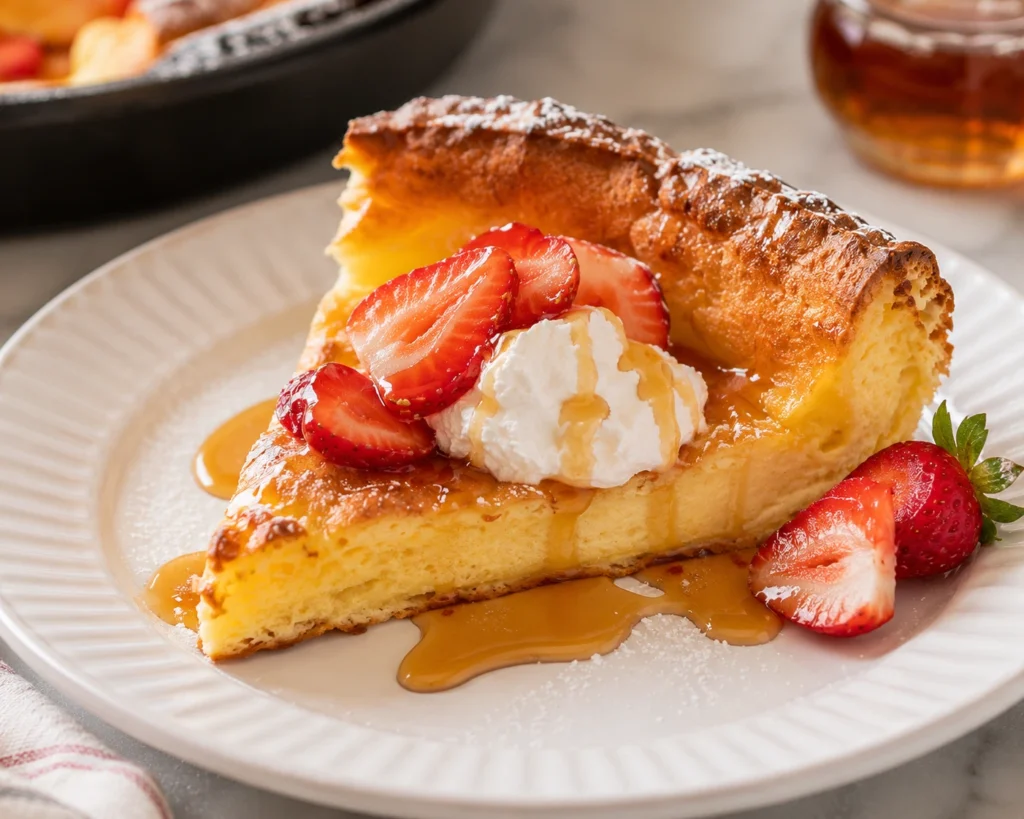
Cut the Dutch baby into triangular wedges like a pizza using a sharp knife or pizza wheel. Serve immediately while warm, paired with fresh berries, warm maple syrup, or a dollop of whipped cream.
Expert Tips for the Highest Rise
- Preheat the Skillet Thoroughly: The secret to dramatic height is thermal shock. Cold batter hitting a searing-hot, buttered pan creates instant steam, forcing the edges to climb rapidly up the skillet walls.
- Bring Liquids to Room Temperature: Warm or room-temperature ingredients expand far faster than cold ones. If you are in a rush, place cold eggs in a bowl of warm water for 5 minutes and microwave your milk for 15 seconds.
- Blend, Don’t Hand-Whisk: A blender incorporates air evenly and eliminates flour lumps without overworking the gluten, resulting in a lighter texture.
- Resist the Urge to Open the Oven: Opening the oven door during the first 15 minutes lets out trapped heat and steam, which can cause your rising pancake to deflate prematurely.
- Let the Batter Rest: Allowing the blended batter to rest at room temperature for 10 minutes lets the starch granules absorb liquid, softening the final texture and ensuring a uniform rise.
- Serve Without Delay: A Dutch baby is meant to be eaten fresh from the oven. It will naturally settle within 2 to 3 minutes of pulling it out, so gather your guests around the table before you slice it!
Common Mistakes to Avoid
- Using Cold Ingredients Straight from the Fridge: Cold milk and eggs lower the skillet temperature instantly, killing your pancake’s potential rise.
- Pancake Baked in an Unheated Pan: Pouring batter into a cool skillet results in a flat, dense, rubbery disc rather than an airy, puffed structure.
- Overmixing the Batter: Excess blending after the flour is incorporated develops tough gluten strands, turning a delicate pancake chewy and heavy.
- Opening the Oven Door Early: Drafts of cool air break the steam bubble holding up the delicate walls, flattening your pancake mid-bake.
- Overbaking: Leaving the pancake in the oven past the 22-minute mark dries out the center, transforming the creamy, tender interior into a dry, egg-bread texture.
Creative Recipe Variations
- Lemon Ricotta Dutch Baby: Dollop ⅓ cup of whole-milk ricotta cheese into the batter just before baking, then finish with fresh lemon zest and powdered sugar.
- Cinnamon Sugar Dutch Baby: Swirl 1 teaspoon of ground cinnamon and 2 tablespoons of brown sugar into the melted butter in the pan before pouring in the batter.
- Mixed Berry Dutch Baby: Scatter ½ cup of fresh blackberries and raspberries into the skillet center immediately after pouring in the batter.
- Apple Cinnamon Dutch Baby: Sauté thinly sliced Granny Smith apples with 1 tablespoon of butter, brown sugar, and cinnamon in the skillet on the stovetop first, then pour the batter over the hot apples and bake.
- Chocolate Dutch Baby: Replace 2 tablespoons of all-purpose flour with 2 tablespoons of unsweetened Dutch-process cocoa powder, then top with chocolate hazelnut spread (Nutella).
- Savory Herb & Cheese Dutch Baby: Omit sugar and vanilla from the batter. Add ¼ teaspoon of black pepper, ¼ cup of grated Gruyère or sharp cheddar, and 1 tablespoon of chopped fresh chives or thyme.
Best Toppings
- Classic Lemon & Powdered Sugar: A simple squeeze of fresh lemon juice combined with a heavy dusting of powdered sugar offers a balanced, bright flavor profile.
- Pure Maple Syrup: Warm, grade-A amber maple syrup brings out the buttery notes of the golden edges.
- Fresh Berries: Strawberries, blueberries, raspberries, and blackberries add vibrant color and fresh acidity.
- Homemade Whipped Cream: Lightly sweetened vanilla bean whipped cream adds a cool, airy element.
- Nutella or Chocolate Sauce: Silky hazelnut spread melted over the hot center creates a rich dessert-for-breakfast option.
- Fruit Compote: Warm blueberry, cherry, or apple compote turns this breakfast into a cozy feast.
- Salty Accompaniments: Crisp cooked bacon, prosciutto, or smoked salmon pair exceptionally well with savory variation bases.
What to Serve With a Dutch Baby
- Crispy Bacon or Breakfast Sausage: Savory pork or turkey sausages balance the sweetness of fruit and syrup toppings.
- Soft Scrambled Eggs: Fluffy, buttery eggs add extra protein to round out your morning meal.
- Fresh Fruit Salad: A light toss of melon, kiwi, and pineapple cuts through the rich egg-and-butter flavor base.
- Greek Yogurt Parfait: Creamy, tangy yogurt layered with granola adds a pleasant crunch.
- Fresh Coffee & Freshly Squeezed OJ: A hot cup of dark roast coffee or a glass of chilled orange juice rounds out a classic weekend brunch spread.
Storage Instructions
Refrigerator
Store leftover Dutch baby slices in an airtight container or zip-top bag in the refrigerator for up to 3 days. Note that the crispness will soften over time as the pancake absorbs moisture.
Freezer
You can freeze baked Dutch baby wedges! Place cooled slices in a single layer on a parchment-lined baking sheet and freeze for 1 hour until firm. Transfer to a freezer-safe bag and store for up to 2 months.
Reheating
To restore those signature crispy edges, avoid the microwave!
- Oven/Toaster Oven: Place leftover slices on a baking sheet and heat at 375°F (190°C) for 5 to 7 minutes until warmed through and crisp around the borders.
- Skillet: Re-crisp slices in a dry skillet over medium heat for 2 to 3 minutes per side.
Can You Make It Ahead?
Yes, you can prepare the batter in advance!
- Overnight Batter Prep: Blend your batter the night before, transfer it to a sealed jar, and store it in the refrigerator overnight.
- Crucial Morning Step: Before baking, set the batter on your kitchen counter for 20 to 30 minutes to bring it back to room temperature. Give it a quick 5-second pulse in the blender or a vigorous whisk to re-incorporate any settled flour before pouring it into your hot, buttered skillet.
Nutrition Information
Serving Size: 1 slice (1/4th of pancake, plain without extra toppings)
- Calories: 220 kcal
- Protein: 8 g
- Carbohydrates: 16 g
- Fat: 14 g
- Saturated Fat: 8 g
- Cholesterol: 160 mg
- Sugar: 4 g
- Fiber: 0.5 g
- Sodium: 210 mg
Frequently Asked Questions
Why didn’t my Dutch baby puff up?
The most common culprits are a skillet that wasn’t hot enough, using cold milk and eggs straight from the fridge, or opening the oven door too early during baking.
Why does it collapse after baking?
It is completely normal for a Dutch baby to deflate shortly after leaving the oven! The high rise is supported by hot steam trapped inside the batter. As the pancake cools, that steam condenses, causing the center to settle into a bowl shape perfect for holding toppings.
Can I make it without a cast iron skillet?
Yes! You can use any oven-safe heavy skillet (like stainless steel or enamel-coated cookware), a 9×13-inch metal baking pan, or a deep pie dish. Preheat the pan in the oven just as you would with cast iron.
Is a Dutch baby the same as a German pancake?
Yes! “Dutch baby” and “German pancake” refer to the exact same dish. The term “Dutch” originated from a corruption of Deutsch, the German word for German.
Can I make it gluten-free?
Absolutely. Substitute the all-purpose flour with a 1:1 gluten-free baking flour blend containing xanthan gum. The pancake may rise slightly less high, but the taste and texture remain delightful.
Can I use almond milk or oat milk?
Yes, but use unflavored, unsweetened plant milks. Keep in mind that lower fat content in non-dairy milks results in a slightly less rich center texture.
Why is my Dutch baby eggy?
Because eggs make up a large portion of the batter to provide structure, a subtle egg flavor is normal. If it tastes overly “eggy,” increase your vanilla extract to 1 ½ teaspoons or add a pinch of cinnamon or nutmeg to mask the egg flavor.
Can I freeze leftovers?
Yes! Freeze individual slices on parchment paper before storing them in a freezer bag for up to 2 months. Reheat in a 375°F (190°C) toaster oven to restore crispness.
Pro Tips
- Blast with High Heat: Ensure your oven holds a true 425°F (220°C). An oven thermometer helps verify that your unit isn’t running cool.
- Blender Aeration is Key: Running the blender on high for a full 45 seconds creates tiny air bubbles that jumpstart the rising process once the batter hits the hot skillet.
- Swirl Butter to Coat Sides: When melting butter in your hot skillet, swirl it up the sides of the pan so the edges rise smoothly without sticking.
- Dust Powdered Sugar Immediately: Sifting sugar over the pancake while it’s fresh out of the oven melts the sugar slightly, creating a delicious glaze.
Dutch Baby vs. Traditional Pancakes
| Feature | Dutch Baby (German Pancake) | Traditional Pancakes |
| Cooking Method | Baked in a high-heat oven (425°F / 220°C) | Cooked individually on a stovetop griddle |
| Texture | Puffed, crispy edges with a custard-like center | Uniformly soft, fluffy, and spongy throughout |
| Pan Requirement | Preheated heavy cast iron skillet | Flat frying pan, skillet, or electric griddle |
| Active Effort | Hands-off (5-minute blend, then oven bakes) | Hands-on (flipping individual pancakes) |
| Serving Style | One large shared pancake sliced into wedges | Stack of individual round cakes |
Related Recipes
Explore these delicious breakfast and brunch recipes: