
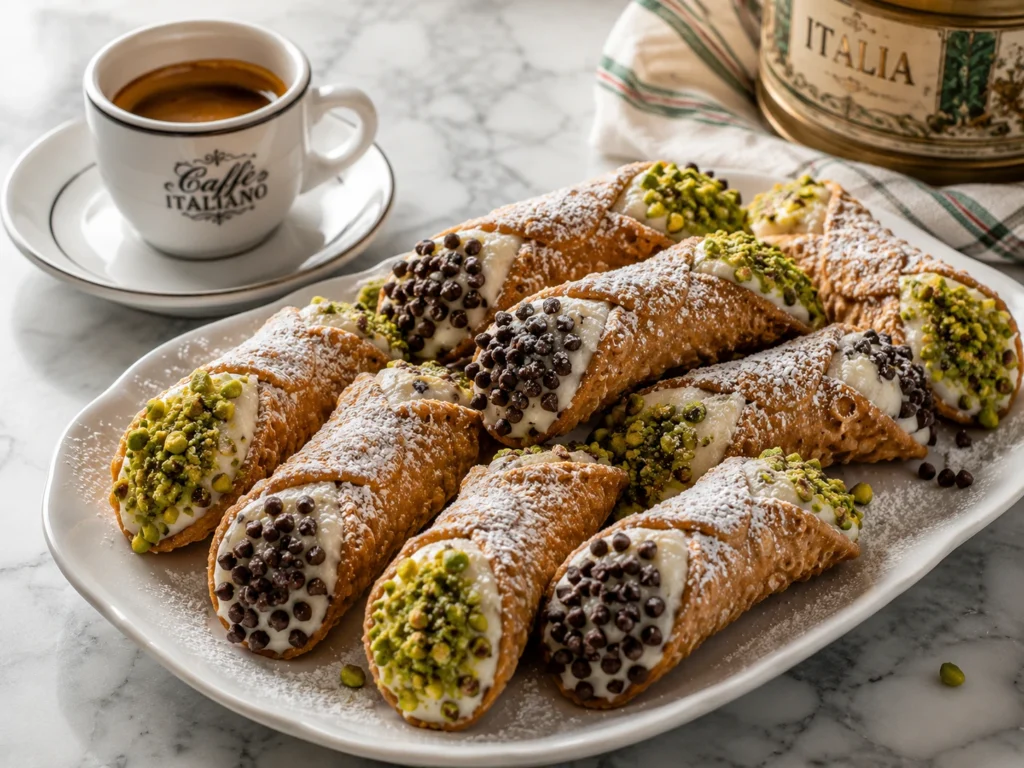
These homemade cannoli feature crisp, golden fried shells filled with creamy sweet ricotta, chocolate chips, and a touch of citrus for a classic Italian dessert.
The very first time I bit into an authentic Sicilian cannolo at a small bakery in Palermo, I was ruined for store-bought versions forever. The shattering snap of a blistered, golden-brown shell giving way to a cool, velvety sweet ricotta cream, punctuated by bitter chocolate and aromatic orange zest, is a masterclass in pastry contrast.
Cannoli (the plural form of cannolo, meaning “little tube”) are the crown jewels of Italian pastry making. Originating in the historic region of Sicily, these iconic treats were traditionally prepared during Carnival season as a symbol of abundance. Today, they are beloved worldwide as the ultimate finale to a special Italian dinner or holiday gathering.
While making cannoli from scratch takes a bit of care, it is remarkably achievable in a home kitchen. The secret to perfection lies in two golden rules: thoroughly draining your ricotta so the cream stays thick and velvety, and piping the filling into the crispy shells just minutes before serving.
Related Recipes:
- Dubai Chocolate Recipe (Crispy Pistachio Kunafa Chocolate)
- Healthy Breakfast Cookie Recipe (Soft, Chewy and Easy)
- S’mores Cookie Recipe (Soft, Gooey and Easy Homemade Cookies)
Cannoli Recipe Card
| Recipe Information | Details |
| Prep Time | 30 minutes |
| Cook Time | 20 minutes |
| Chilling Time | 1 hour |
| Total Time | 1 hour 50 minutes |
| Yield | 12 large cannoli |
| Servings | 12 portions |
| Calories | 280 kcal per cannolo |
| Course | Dessert |
| Cuisine | Italian / Sicilian |
| Method | Deep Frying & Hand Piping |
| Keywords | cannoli recipe, homemade cannoli, Italian cannoli recipe, traditional cannoli, ricotta cannoli filling, crispy cannoli shells |
Why You’ll Love This Recipe
- Crispy, Blistered Shells: A traditional Marsala-infused dough that bubbles and turns shattering crisp when fried.
- Silky Sweet Ricotta Filling: Perfectly balanced whole-milk ricotta sweetened with powdered sugar and brightened with fresh citrus.
- Authentic Sicilian Flavor Profile: Touches of orange zest, cinnamon, and mini chocolate chips recreate classic bakery flavor.
- Make-Ahead Friendly Components: Both the fried shells and the cream filling can be prepared ahead of time and assembled right before serving.
- No Soggy Shells: My specific technique ensures your pastry stays crunchy from the first bite to the last.
- Showstopping Holiday Dessert: The ultimate center-piece for Christmas Eve, Easter, dinner parties, or Sunday family suppers.
What Are Cannoli?
Cannoli are traditional Italian pastries consisting of tube-shaped shells of fried pastry dough filled with a sweet, creamy filling usually containing ricotta cheese.
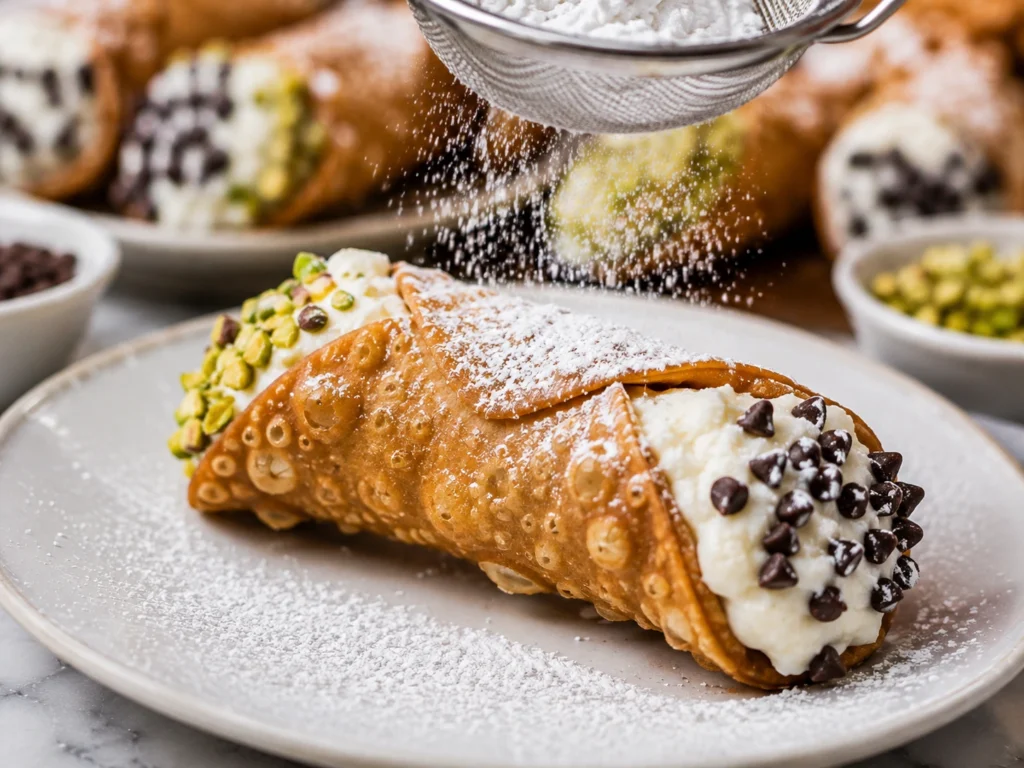
The contrast between the crunchy, fried outer shell and the smooth, cold dairy interior defines the dessert. The ends of the filled tubes are customarily decorated with mini chocolate chips, chopped toasted pistachios, or candied orange peel, and finished with a delicate dusting of powdered sugar.
Where Did Cannoli Come From?
Cannoli originated in the Sicilian city of Caltanissetta between 827 and 1091 AD, during the period of Arab rule on the island. Historians believe the pastry was originally created by concubines in the emir’s harem as a festive treat for Carnival.
When Christian rule returned to Sicily, local cloistered nuns preserved the recipe, baking cannoli inside convents to celebrate Carnival before Lent. Over centuries, Italian immigrants brought their treasured family recipes to cities like Boston, New York, and Philadelphia, establishing cannoli as an international icon of Italian-American culture.
Ingredients For Cannoli
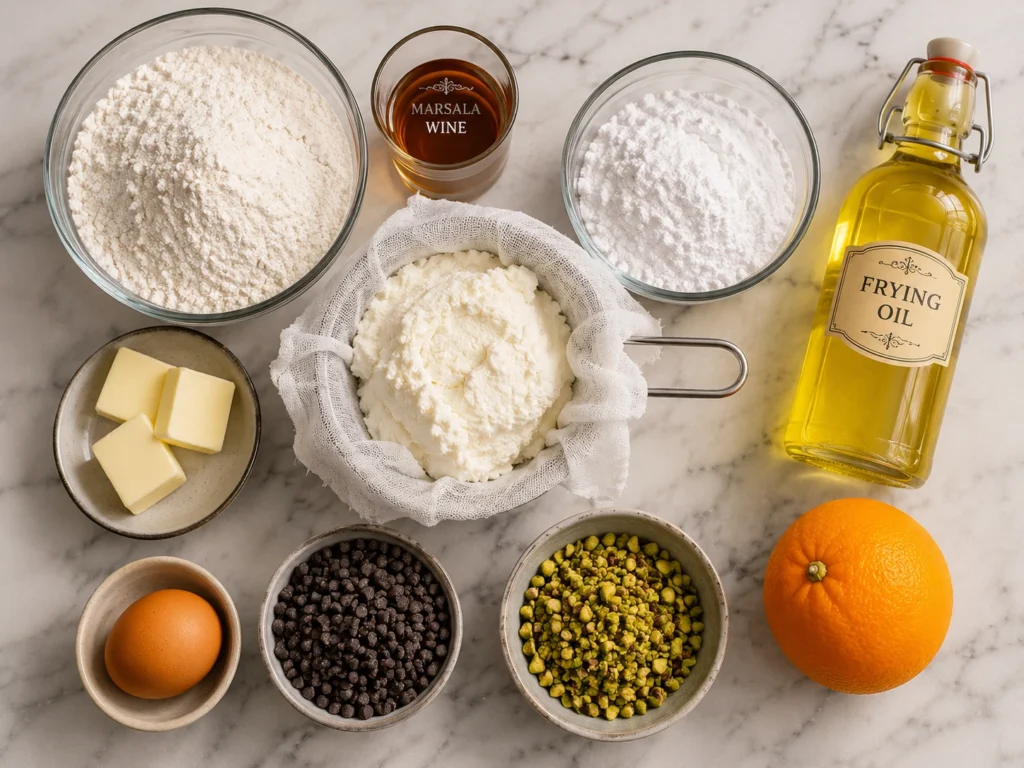
For the Crispy Cannoli Shells
- 2 cups (240 g) all-purpose flour
- 2 tablespoons (25 g) granulated sugar
- 1 tablespoon unsweetened cocoa powder (for authentic color)
- ½ teaspoon ground cinnamon
- ¼ teaspoon fine sea salt
- 2 tablespoons (28 g) unsalted butter, cold and cubed
- ½ cup (120 ml) dry Marsala wine (or sweet white wine)
- 1 large egg (divided: yolk for dough, white for egg wash)
- Vegetable or canola oil (for deep frying)
For the Sweet Ricotta Filling
- 3 cups (720 g) whole-milk ricotta cheese (drained overnight)
- 1 cup (120 g) powdered sugar, sifted
- 1 teaspoon pure vanilla extract
- ½ teaspoon freshly grated orange zest
- ½ cup (85 g) mini semi-sweet chocolate chips
Optional Garnishes
- ¼ cup finely chopped raw pistachios
- Extra mini chocolate chips
- Candied orange peel slices
- Powdered sugar (for dusting)
Ingredient Notes
Whole-Milk Ricotta Cheese
The quality and texture of your filling depend entirely on the ricotta. Always buy whole-milk, high-quality ricotta without gums or stabilizers. Low-fat or skim versions contain excess water and will make your filling runny.
Marsala Wine
Dry Marsala wine is a fortified Italian wine that serves two vital purposes in the dough:
- Its natural acid relaxes the gluten, allowing you to roll the dough paper-thin.
- Its alcohol content evaporates instantly when dropped in hot oil, creating those signature micro-bubbles and blisters across the shell surface.
Cocoa Powder and Cinnamon
A small touch of unsweetened cocoa powder and cinnamon adds subtle warmth and gives traditional Sicilian shells their rich, golden-mahogany hue.
How to Drain Ricotta for Cannoli
The single biggest reason homemade cannoli filling turns out watery or runny is undrained ricotta. Commercial ricotta is packed with liquid whey that must be removed before mixing with sugar.
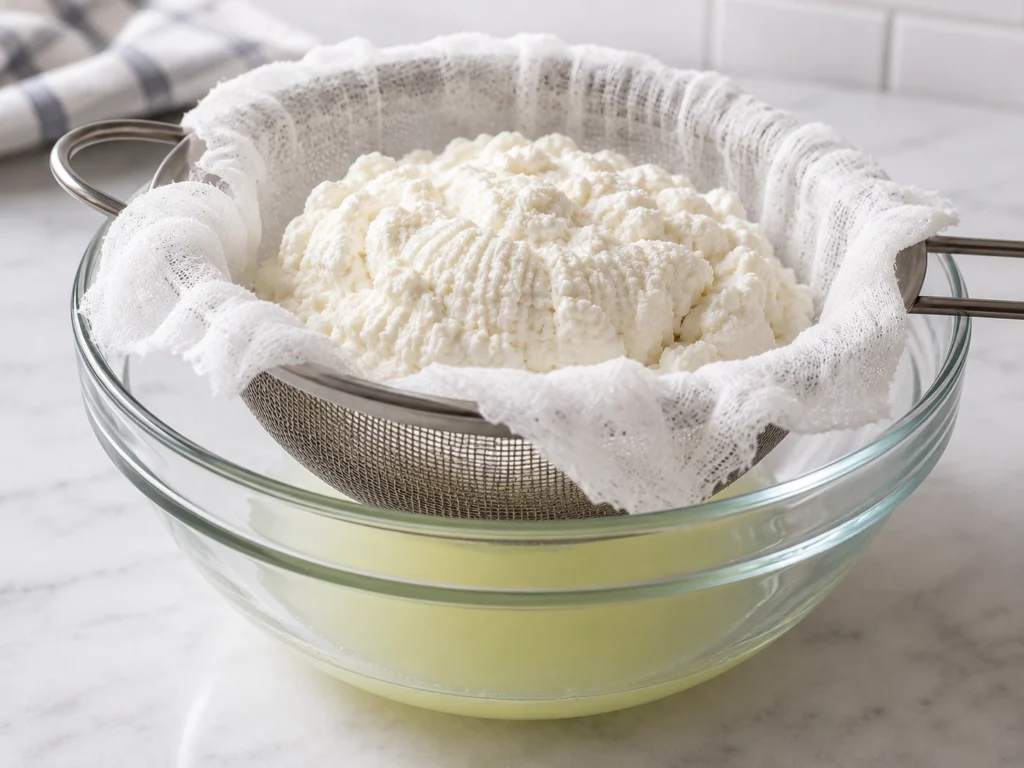
The Step-by-Step Draining Process
- Line a fine-mesh sieve or colander with two layers of cheesecloth or thick paper towels.
- Scoop the whole-milk ricotta into the center of the cloth.
- Fold the edges of the cloth over the top of the ricotta and place a small plate on top. Weigh the plate down with a heavy soup can or jar.
- Set the colander over a bowl and refrigerate for at least 12 to 24 hours.
- You will be amazed to see up to ½ cup of liquid whey drain out into the bowl! The remaining ricotta will feel dense, thick, and almost like cream cheese.
Why Is My Cannoli Filling Watery?
If your cannoli filling turns runny after you mix it, one of these issues is responsible:
- Skipping the Draining Phase: Fresh ricotta contains up to 80% water. Mixing sugar directly into undrained ricotta dissolves the sugar into a liquid syrup.
- Over-Whisking the Filling: Whisking or using a high-speed electric mixer breaks down the protein structure of the cheese, liquifying it. Always fold ingredients gently by hand with a spatula.
- Using Granulated Sugar: Granulated sugar crystals pull moisture out of the cheese through osmosis. Always use sifted powdered sugar, which contains a touch of cornstarch to absorb residual dampness.
How to Make Cannoli Shells
Step 1: Make the Dough
In a large bowl or food processor, combine the flour, granulated sugar, cocoa powder, cinnamon, and salt. Cut in the cold cubed butter until the mixture resembles coarse cornmeal. Add the egg yolk and Marsala wine, stirring until a firm dough comes together.
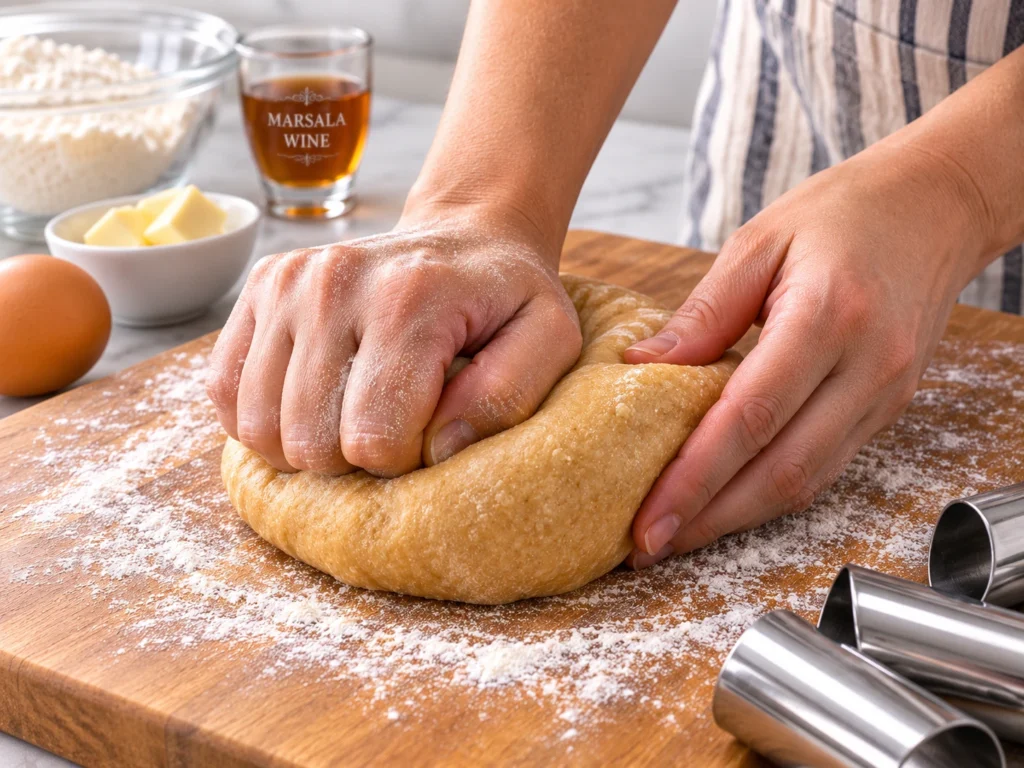
Step 2: Knead and Rest
Turn the dough onto a lightly floured surface and knead vigorously for 3 to 5 minutes until smooth and elastic. Wrap tightly in plastic wrap and let rest at room temperature for 1 hour (or up to 2 hours) to relax the gluten.
Step 3: Roll Paper-Thin
Divide the dough into 4 manageable pieces. Working with one piece at a time (keep the rest covered), roll the dough using a rolling pin or pasta machine to an ultra-thin thickness of 1/16-inch (about 1.5 mm). The dough should be thin enough that you can faintly see the outline of your fingers beneath it.
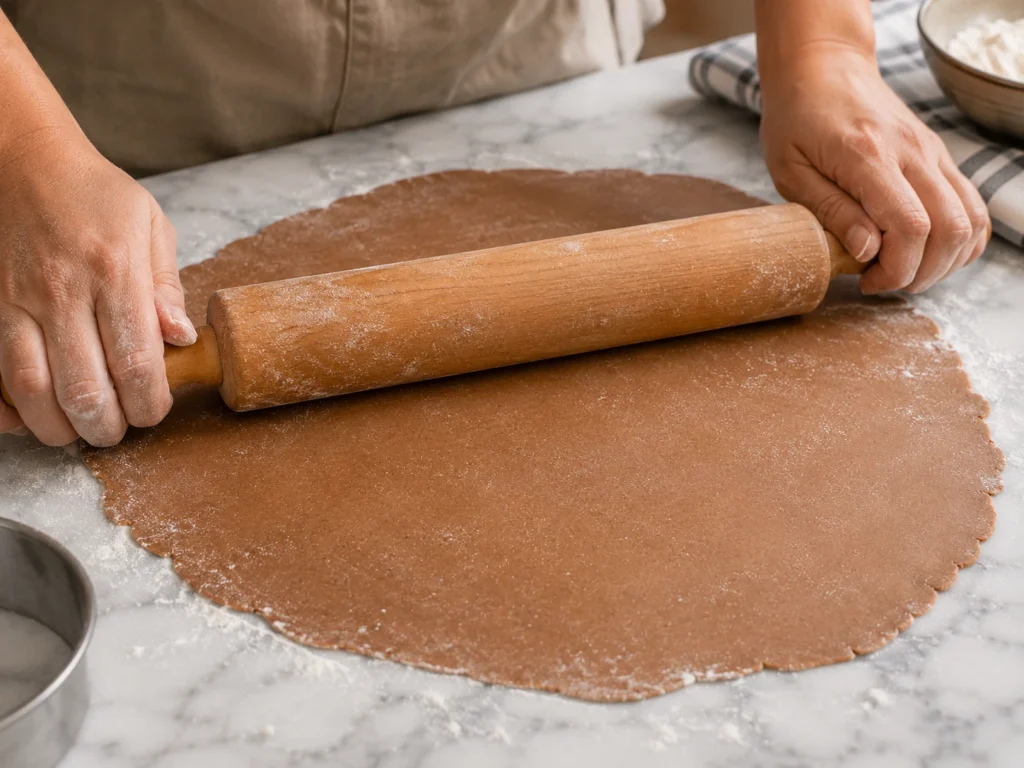
Step 4: Cut and Wrap
Use a 3.5-inch to 4-inch round or oval biscuit cutter to cut circles out of the dough. Lightly grease metal cannoli tubes with oil. Wrap a dough circle loosely around a tube. Brush a tiny drop of reserved egg white on the overlapping flap and press firmly to seal. Do not get egg wash on the metal tube, or the pastry will stick to it during frying!
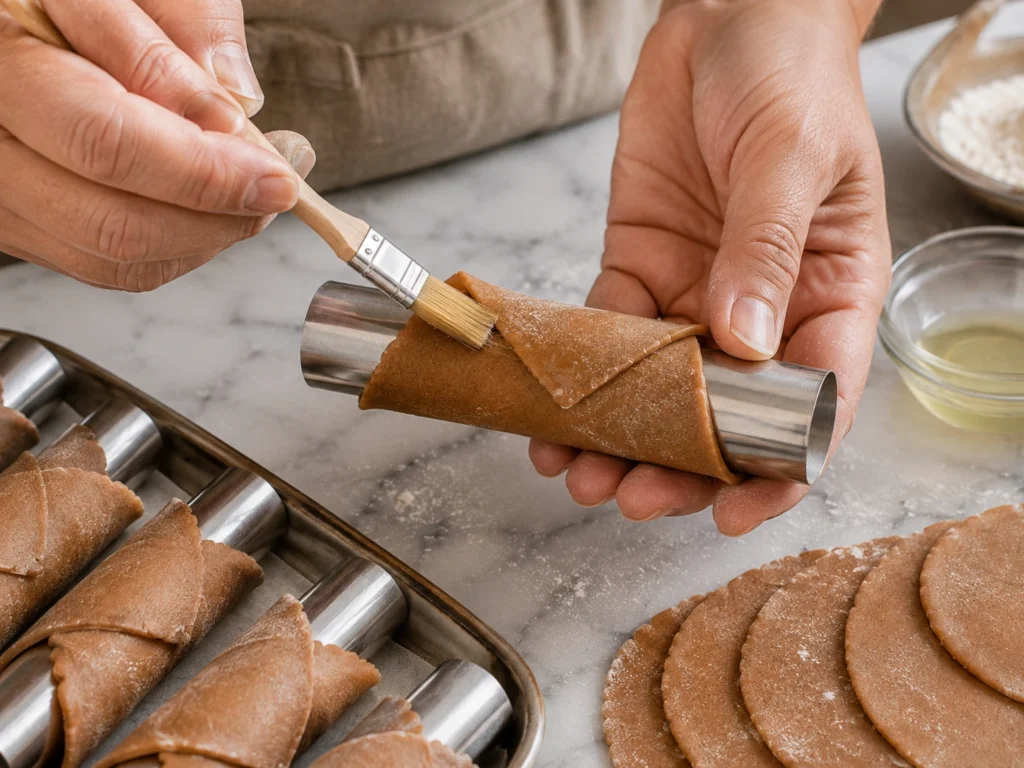
How to Fry Cannoli Shells
Frying Instructions
- Heat 2 inches of canola or vegetable oil in a heavy Dutch oven or deep skillet to 360°F–375°F (182°C–190°C). Use a candy or deep-fry thermometer to monitor heat.
- Carefully lower 3 to 4 wrapped tubes into the hot oil using metal tongs.
- Fry for 1 to 2 minutes, turning once, until the shells are deep golden brown and covered in micro-blisters.
- Remove with tongs and drain on a paper towel-lined baking sheet.
- Let cool for 2 minutes, then use a paper towel to grasp the metal tube gently while sliding the fried shell off. Repeat with remaining dough.
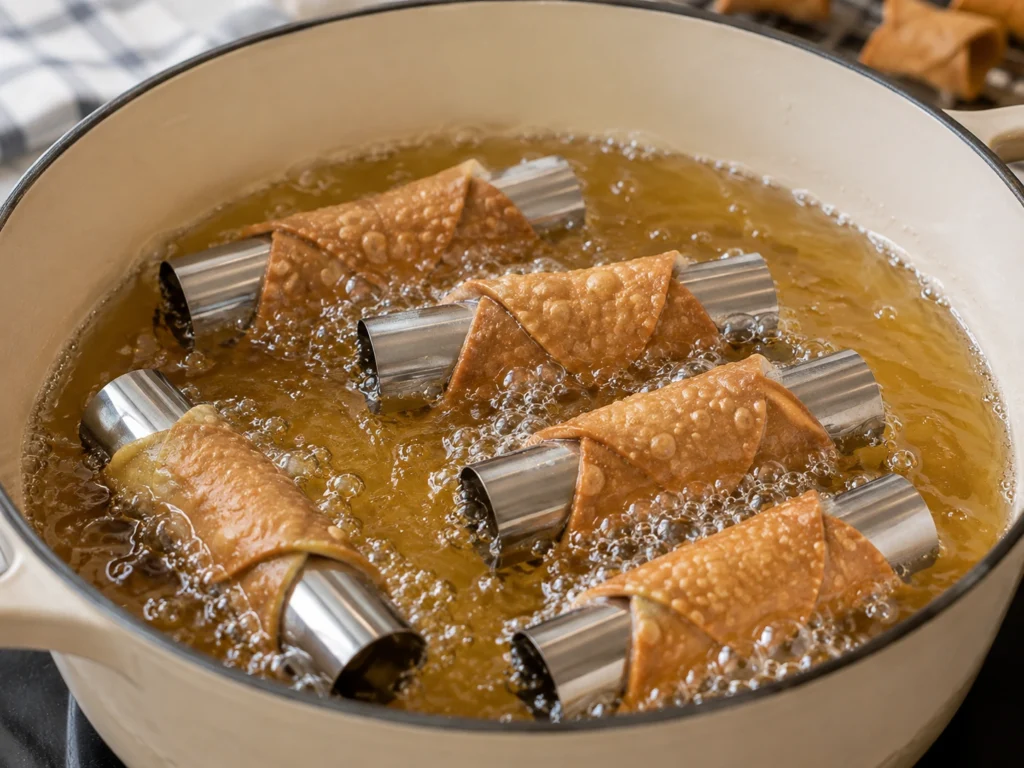
How to Prevent Cannoli Shells From Opening
It can be frustrating when wrapped dough flaps spring open the moment they hit hot oil. Prevent unravelling with these 3 tips:
- Don’t Over-Tighten: Leave a slight gap between the dough and the metal tube so steam can escape.
- Seal with Egg White Only: Use pure egg white as glue—not water or whole egg. Dab a tiny dot onto the overlap and press firmly for 3 seconds.
- Avoid Getting Glue on the Tube: If egg white touches the metal tube, it glues the pastry to the steel, causing the shell to crack when unmolded.
How to Make Cannoli Filling
- Combine Cheese and Sugar: Place the thoroughly drained, dense ricotta into a large bowl. Add 1 cup of sifted powdered sugar.
- Fold Gently: Use a rubber spatula to fold the sugar into the cheese until smooth and creamy. Do not whisk aggressively!
- Add Aromatics: Fold in 1 teaspoon vanilla extract and ½ teaspoon fresh orange zest until distributed.
- Fold in Chocolate Chips: Gently stir in ½ cup of mini chocolate chips.
- Chill to Set: Transfer the filling into a pastry bag fitted with an open star or wide round tip (or a sturdy zip-top bag). Refrigerate for at least 1 hour before piping.
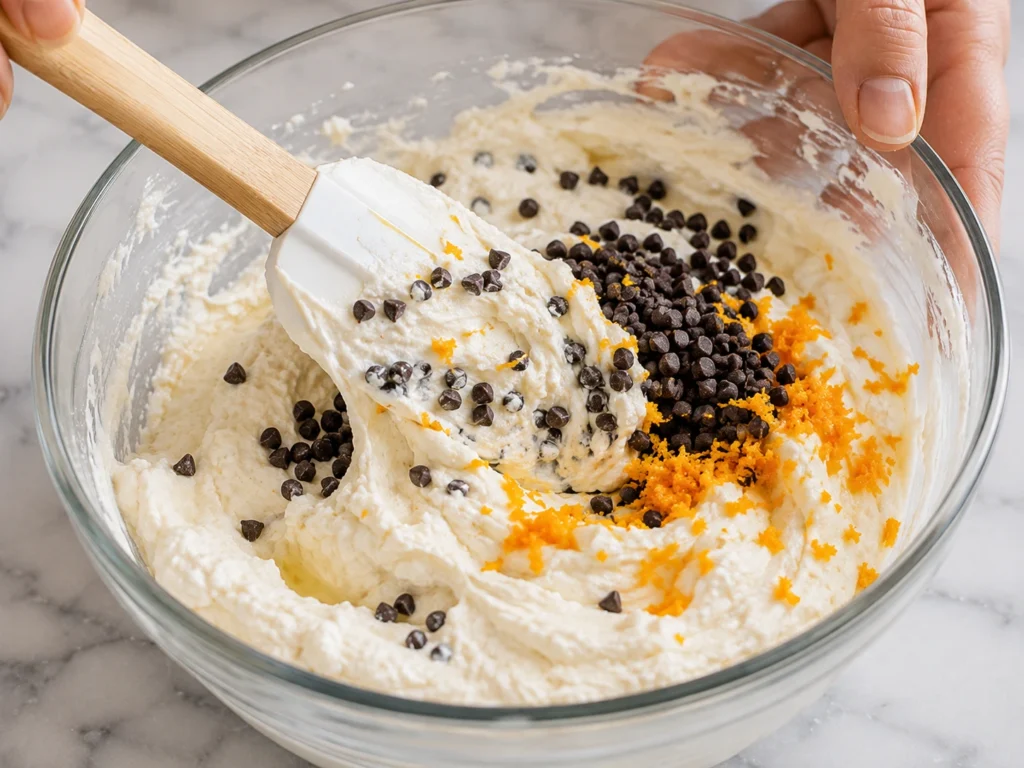
How to Fill Cannoli
Always wait until 30 to 60 minutes before serving to fill your fried shells!
- Insert the tip of your piping bag halfway into one end of a cooled cannoli shell.
- Squeeze firmly while backing the tip out until the shell is filled to the outer rim.
- Turn the shell around and repeat from the opposite end so the center is fully stuffed.
- Dip the exposed cream ends into chopped pistachios or extra mini chocolate chips.
- Dust the tops generously with powdered sugar right before placing them on your serving tray.
How to Keep Cannoli Shells Crispy
The ultimate enemy of a crispy cannoli shell is moisture migration. Ricotta cream naturally contains water, which softens fried pastry over time.
Golden Rules for Maximum Crunch
- Pipe Fresh: Never fill cannoli hours in advance or overnight. Fill them within 1 hour of serving.
- Chocolate Coating Barrier (Pro Trick): Brush the inside of your fried, cooled shells with a thin layer of melted dark chocolate. Let the chocolate harden completely before piping in the filling. The chocolate creates an impermeable moisture barrier, keeping the shell crisp for up to 6 hours!
- Store Components Separately: Keep unfilled shells at room temperature in an airtight box, and keep your piping bag of filling chilled in the fridge.
Best Cannoli Toppings & Garnishes
Customize your cannoli ends with these classic Sicilian finishes:
| Topping | Flavor Profile | Visual Impact |
| Chopped Pistachios | Nutty, buttery crunch | Vibrant green contrast against white cream |
| Mini Chocolate Chips | Rich, bittersweet chocolate | Classic Italian-American bakery style |
| Candied Orange Peel | Bright, chewy citrus bite | Authentic Sicilian tradition |
| Toasted Sliced Almonds | Subtle nutty crunch | Elegant and delicate |
| Maraschino Cherries | Sweet, fruity pop | Traditional holiday garnish |
Creative Cannoli Variations
- Chocolate-Dipped Cannoli: Dip the outer rims of the fried shells into melted bittersweet chocolate, dip in chopped nuts, and allow to set before filling.
- Mascarpone Blend: Substitute 1 cup of the drained ricotta with 1 cup of rich Italian mascarpone cheese for an extra silky, stable filling.
- Pistachio Cream Filling: Fold 2 tablespoons of pure pistachio paste into the ricotta mixture for a pale green, nutty filling.
- Dip-Style Cannoli (Cannoli Dip): Serve the sweet ricotta filling in a bowl surrounded by broken, fried cannoli shell chips or waffle cones for casual party snacking!
Can You Make Cannoli Ahead of Time?
Yes! You can prep all components in advance so assembly takes just 2 minutes on party day:
- Cannoli Shells: Fry up to 3 days in advance. Cool completely and store in an airtight container at room temperature lined with paper towels. Do not refrigerate unfilled shells!
- Ricotta Filling: Prepare and pack into a piping bag up to 2 days in advance. Keep stored in the refrigerator until ready to assemble.
- Assembled Cannoli: Must be eaten within 1 to 2 hours of piping for optimal texture.
How to Store Cannoli
Unfilled Shells
Store cooled, unfilled shells in an airtight container at room temperature for up to 1 week. Keep them in a dry pantry away from kitchen steam and humidity.
Ricotta Filling
Keep unused ricotta filling sealed in a piping bag or airtight glass container in the refrigerator for up to 3 to 4 days. If a small amount of liquid separates after resting, stir gently with a spoon before piping.
Filled Cannoli
If you have leftover filled cannoli, store them in a single layer in a paper towel-lined container in the fridge for up to 24 hours. While the shells will soften and lose their shatter-crunch, they still taste delicious!
Can You Freeze Cannoli?
- Freezing Shells: Yes! Freeze cooled, unfilled shells in a rigid plastic container separated by parchment paper for up to 2 months. Re-crisp in a 350°F (175°C) oven for 3 minutes before filling.
- Freezing Filling:Not recommended. Freezing ricotta causes the water and fat solids to separate upon thawing, resulting in a grainy, watery mess.
- Freezing Assembled Cannoli: Never freeze assembled cannoli.
Troubleshooting Common Cannoli Problems
Why Are My Shells Not Crispy or Blistered?
The dough was rolled too thick, or the oil temperature dropped below 350°F (175°C). Ensure your dough is paper-thin (1/16-inch) and use a candy thermometer to keep oil hot.
Why Did My Shells Crack While Frying?
The dough was dry or under-rested. Ensure you rest the kneaded dough for a full hour so the gluten relaxes before rolling.
Why Did My Filling Soften the Shells Instantly?
The ricotta was not drained sufficiently before mixing, or granulated sugar was used instead of powdered sugar.
What to Serve With Cannoli
- Italian Coffee: Serve alongside hot espresso, a foamy cappuccino, or a ristretto.
- Dessert Wines: Pair with sweet Italian dessert wines such as Vin Santo, Marsala, or Moscato d’Asti.
- Digestifs: Enjoy after dinner with a small glass of chilled Limoncello, Amaretto, or Sambuca.
Nutrition Information
Calculated for 1 filled cannolo (1/12th of recipe).
| Nutrient | Amount Per Serving |
| Calories | 280 kcal |
| Total Fat | 14 g |
| Saturated Fat | 7 g |
| Cholesterol | 45 mg |
| Sodium | 110 mg |
| Total Carbohydrates | 31 g |
| Dietary Fiber | 1.5 g |
| Sugars | 16 g |
| Protein | 7 g |
Frequently Asked Questions
What is cannoli filling made of?
Traditional cannoli filling is made from drained whole-milk ricotta cheese, powdered sugar, vanilla extract, and fresh citrus zest (orange or lemon), often folded with mini chocolate chips.
What kind of ricotta is best for cannoli?
Whole-milk sheep’s milk ricotta is most authentic to Sicily, but high-quality whole-milk cow’s milk ricotta is the standard and best choice in North America. Avoid low-fat or part-skim versions.
Can I bake cannoli shells instead of frying them?
While you can bake wrapped shells at 375°F (190°C) for 12 to 15 minutes, they will not develop the iconic micro-blisters, rich flavor, or shattering crispness of authentic fried shells.
What can I use instead of Marsala wine?
You can substitute Marsala wine with dry white wine mixed with 1 teaspoon of brandy, or sweet dark grape juice mixed with 1 teaspoon of white vinegar for an alcohol-free version.
What is the difference between cannoli and cannolo?
Cannolo is the singular noun (one single pastry), while cannoli is the plural noun (two or more pastries).
Pro Tips
- Use Metal Cannoli Tubes: Inexpensive stainless steel cannoli molds (about 4 to 5 inches long) are essential for holding pastry shape during frying.
- Keep Oil Heat Steady: Frying oil drops in temperature when dough is added. Adjust your stove dial to maintain 360°F–375°F consistently.
- Dust Powdered Sugar Last: Always dust powdered sugar over the shells seconds before serving so the sugar doesn’t melt into the fried oil surface.
Related Recipes
Expand your Italian baking repertoire with these classic desserts: