
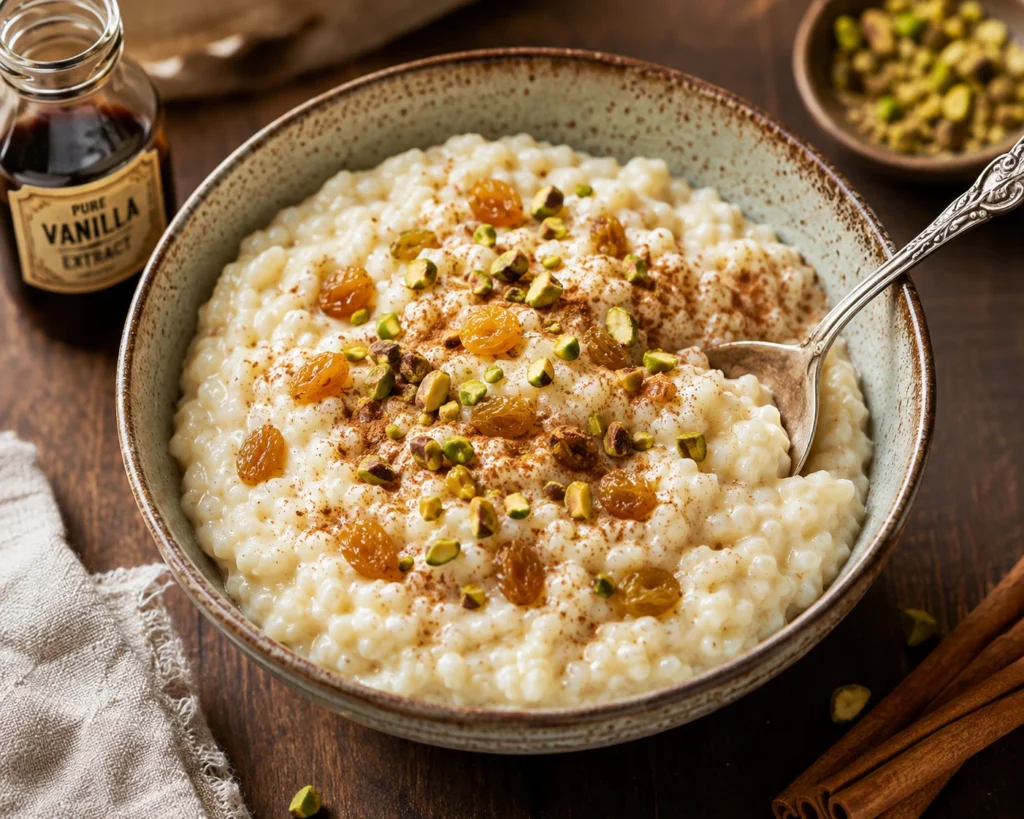
This creamy homemade rice pudding is an easy, comforting dessert made with tender rice, milk, sugar, vanilla, and warm cinnamon. Serve it warm or chilled for a simple sweet treat.
Few desserts spark nostalgic comfort quite like a warm bowl of freshly made rice pudding. Growing up, the fragrant aroma of simmering sweet milk and cinnamon wafting through the kitchen meant a cozy treat was just minutes away. It is proof that you don’t need fancy pastry tools or complex techniques to make something truly extraordinary.
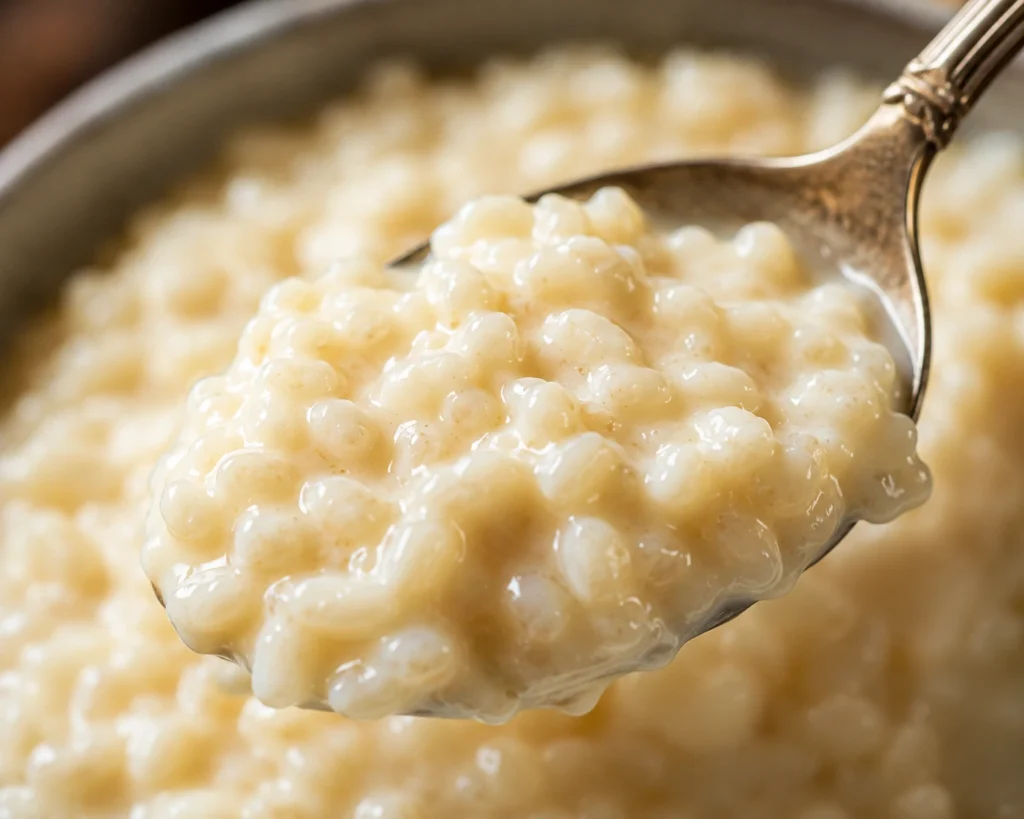
At its core, a classic rice pudding relies on a magical culinary transformation: as starch slowly releases from tender grains of rice into hot, sweetened milk, it creates a naturally thick, velvety cream sauce. Finished with a splash of pure vanilla and a dusting of ground cinnamon, every spoon delivers pure comfort.
Whether you enjoy it warm straight off the stovetop on a chilly evening or chilled from the fridge on a warm afternoon, this easy rice pudding recipe comes together using simple pantry staples you already have on hand.
Also Read:
- Dubai Chocolate Recipe (Crispy Pistachio Kunafa Chocolate)
- Angel Food Cake Recipe (Light, Fluffy and Homemade)
Rice Pudding Recipe Card
| Recipe Information | Details |
|---|---|
| Prep Time | 5 minutes |
| Cook Time | 35–45 minutes |
| Total Time | 40–50 minutes |
| Servings | 6 servings |
| Yield | Approx. 4 cups |
| Calories | 220 kcal per serving |
| Course | Dessert |
| Cuisine | American / European-Inspired |
| Method | Stovetop Simmering |
| Keywords | rice pudding recipe, homemade rice pudding, creamy rice pudding, stovetop rice pudding, easy rice dessert |
Why You’ll Love This Recipe
- Creamy & Comforting: Achieves a velvety, rich texture without needing heavy cream or complex custards.
- Simple Pantry Staples: Uses basic everyday ingredients—white rice, milk, sugar, salt, vanilla, and cinnamon.
- One-Pot Stovetop Dessert: Minimal cleanup required since everything simmers together in a single saucepan.
- Warm or Chilled: Tastes equally delightful served hot straight off the stove or cold from the refrigerator.
- Egg-Free & Easy: Naturally thickened by rice starches, making it beginner-friendly and egg-free.
- Infinitely Customizable: Easy to adapt with raisins, nuts, citrus zest, or plant-based dairy substitutes.
What Is Rice Pudding?
Rice pudding is a sweet dish made by cooking rice in milk (or water) and sweetening it with sugar, honey, or condensed milk. It is enjoyed across almost every major culture worldwide, featuring unique regional variations:
- Middle Eastern (Sutlac / Riz bi Haleeb): Often scented with orange blossom water, rose water, or cardamom.
- Latin American (Arroz con Leche): Cooked with cinnamon sticks, evaporated milk, and sweet condensed milk.
- Indian (Kheer): Made by slow-reducing milk with basmati rice, saffron, nuts, and green cardamom.
- European & American Style: A cozy stovetop or baked pudding flavored with vanilla, cinnamon, and optional raisins.
Because rice pudding takes many forms globally, there is no single “correct” way to make it—though achieving a smooth, creamy grain texture remains the universal goal!
Ingredients You’ll Need for Rice Pudding
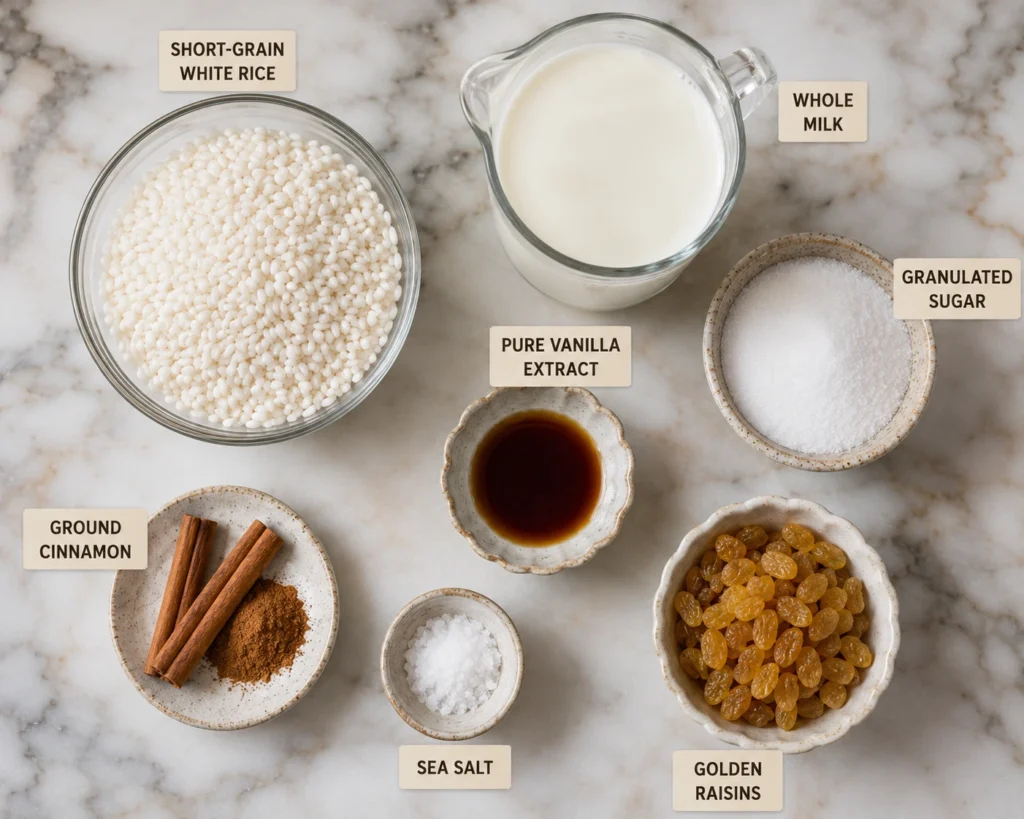
Main Ingredients
- ½ cup uncooked short-grain or medium-grain white rice (such as Arborio or Calrose)
- 4 cups whole milk (divided: 3 ½ cups for cooking, ½ cup for finishing)
- ⅓ cup granulated sugar
- ¼ teaspoon fine sea salt
- 1 teaspoon pure vanilla extract
- ½ teaspoon ground cinnamon (plus extra for garnish)
Optional Mix-Ins & Garnishes
- ⅓ cup golden raisins or dried cranberries
- 1 tablespoon unsalted butter (for extra glossiness)
- Fresh berries, chopped toasted almonds, or pistachios
Ingredient Notes
- The Rice Choice: Short-grain or medium-grain white rice works best. These varieties contain higher levels of amylopectin starch, which releases into the milk during simmering to create a naturally thick, creamy sauce without needing cornstarch.
- Whole Milk: Whole milk provides the ideal fat balance for a rich, silky mouthfeel. Using skim or 1% milk yields a thinner, less luxurious pudding.
- Granulated Sugar: Sweetens the milk base without altering the clean white color of the pudding. Adjust the quantity slightly up or down to suit your sweet tooth.
- Vanilla Extract: Always add real vanilla extract right at the end of cooking off the heat. Heating vanilla too long can cause its delicate aromatic compounds to evaporate.
- Cinnamon: Ground cinnamon adds classic warmth. Cooking a whole cinnamon stick in the milk bath offers a subtle, infused spice flavor.
Best Rice for Rice Pudding
Choosing the right grain is the single most important factor when making stovetop rice pudding:
| Rice Variety | Starch Level | Final Texture Result | Recommendation |
|---|---|---|---|
| Short-Grain White / Arborio | Very High | Ultra-cremous, thick, and rich | Best Choice |
| Medium-Grain White (Calrose) | High | Soft, creamy, with gentle grain separation | Great Choice |
| Long-Grain White (Jasmine/Basmati) | Moderate | Distinct grains; lighter, thinner sauce | Good (requires gentle mashing) |
| Brown Rice | Low | Chewy, nutty; takes twice as long to cook | Not recommended for classic style |
How to Make Rice Pudding
Step 1: Combine Rice, Milk, Sugar, and Salt
In a medium heavy-bottomed saucepan, combine ½ cup uncooked short-grain white rice, 3 ½ cups whole milk, ⅓ cup granulated sugar, and ¼ teaspoon fine sea salt. Stir well with a wooden spoon.
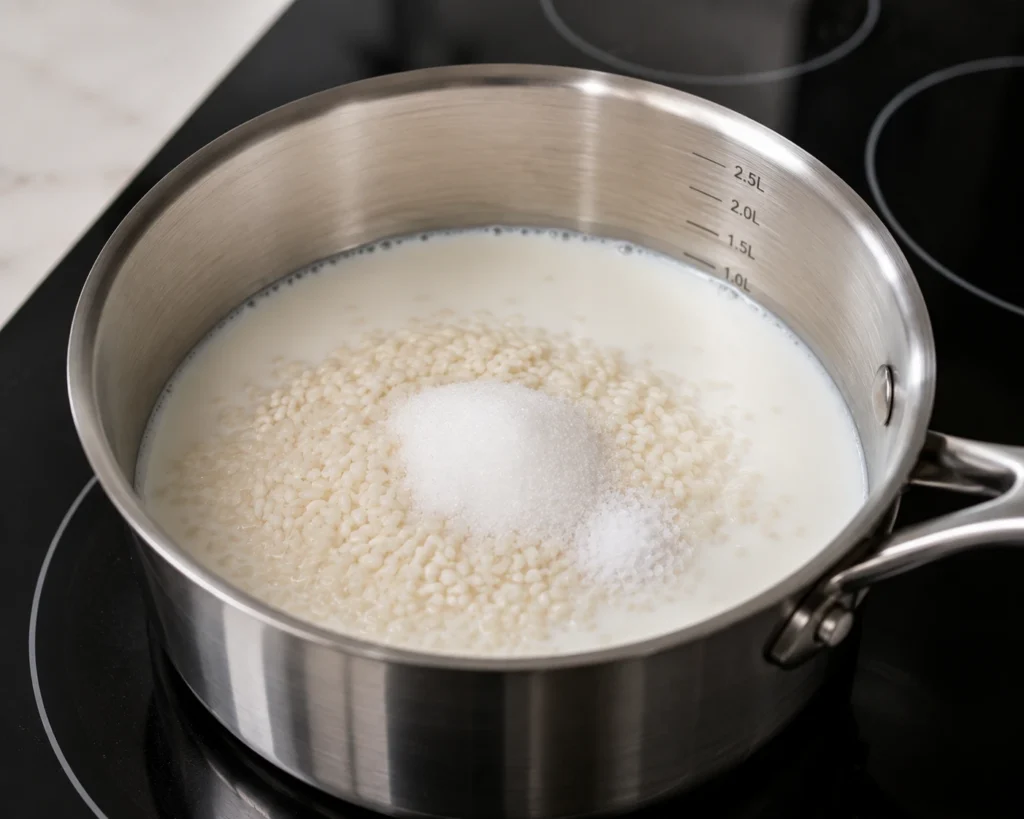
Step 2: Bring to a Gentle Simmer
Place the saucepan over medium heat. Bring the mixture to a gentle simmer, stirring frequently. Watch closely so the milk does not boil over or scorch on the bottom of the pan.
Step 3: Cook Slowly and Stir Regularly
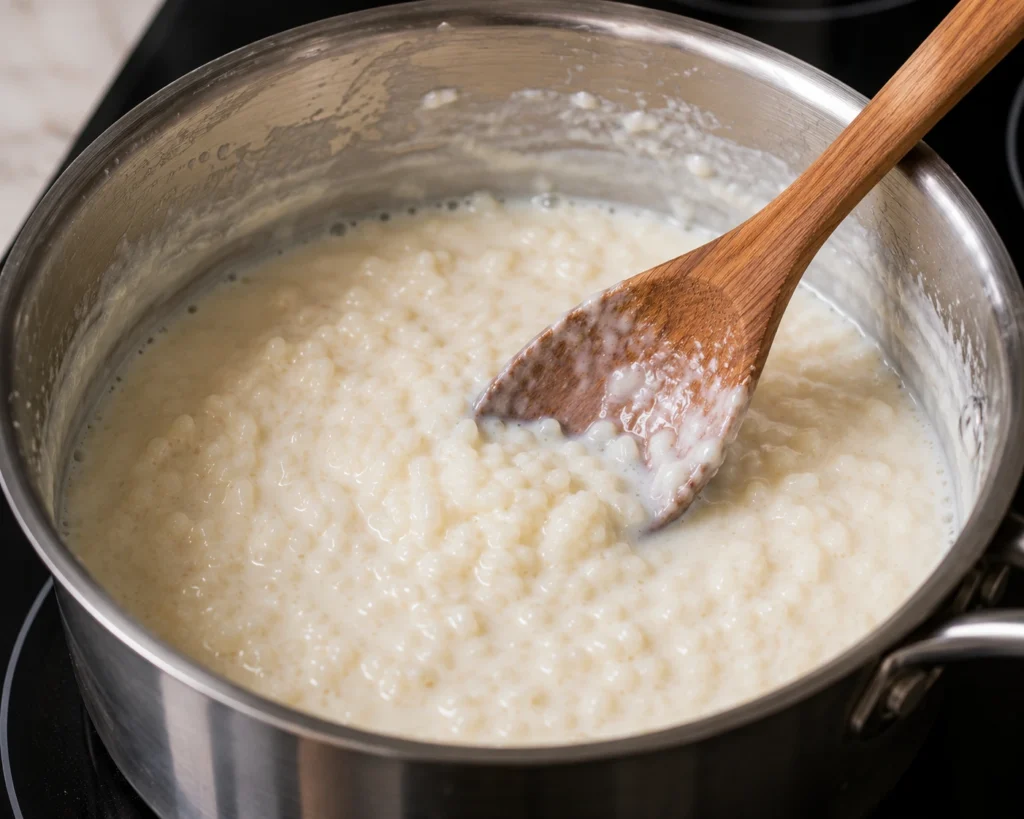
Once simmering, turn the heat down to low. Simmer uncovered for 35 to 45 minutes, stirring every 3 to 5 minutes (and more frequently toward the end of cooking). Maintain a soft bubble. Stirring scrapes the bottom of the pan to prevent scorching and encourages the rice starches to release into the milk.
Step 4: Add Vanilla and Mix-Ins
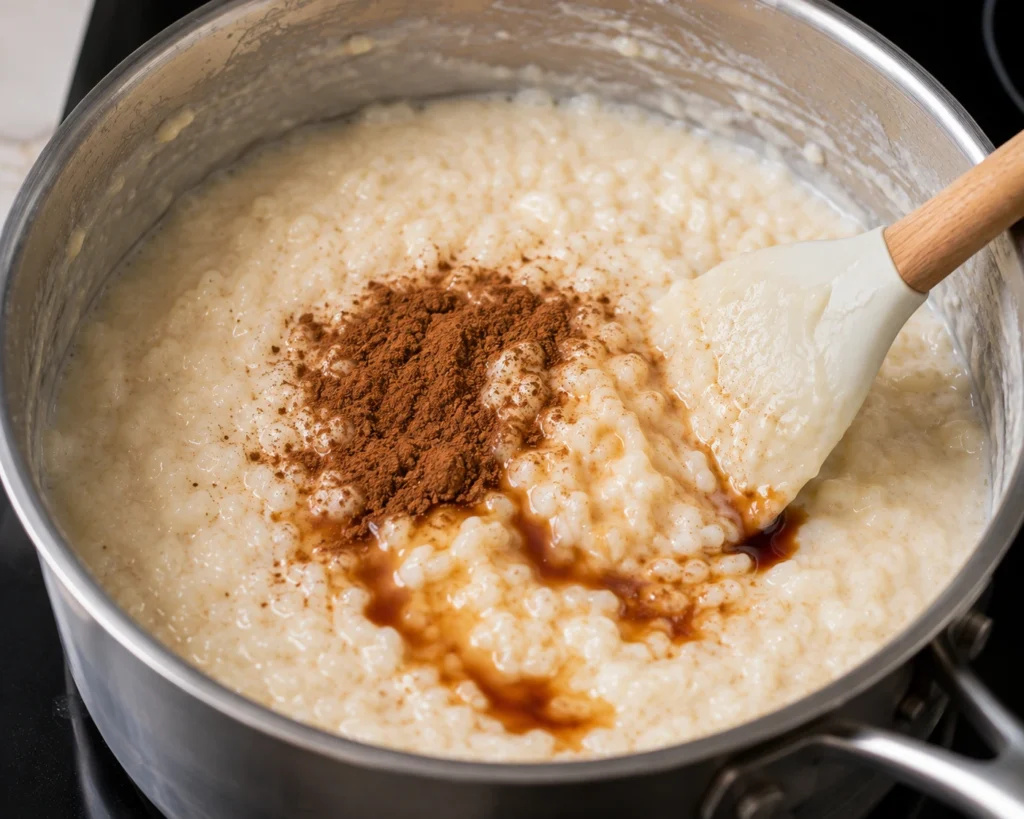
When the rice is completely tender and the mixture has thickened to a rich, soup-like consistency (it will thicken significantly as it cools), remove the pan from the heat. Stir in 1 teaspoon vanilla extract, ½ teaspoon ground cinnamon, 1 tablespoon butter (if using), and ⅓ cup golden raisins (if using). Stir in the remaining ½ cup of whole milk to loosen the texture into a silky glaze.
Step 5: Rest and Serve
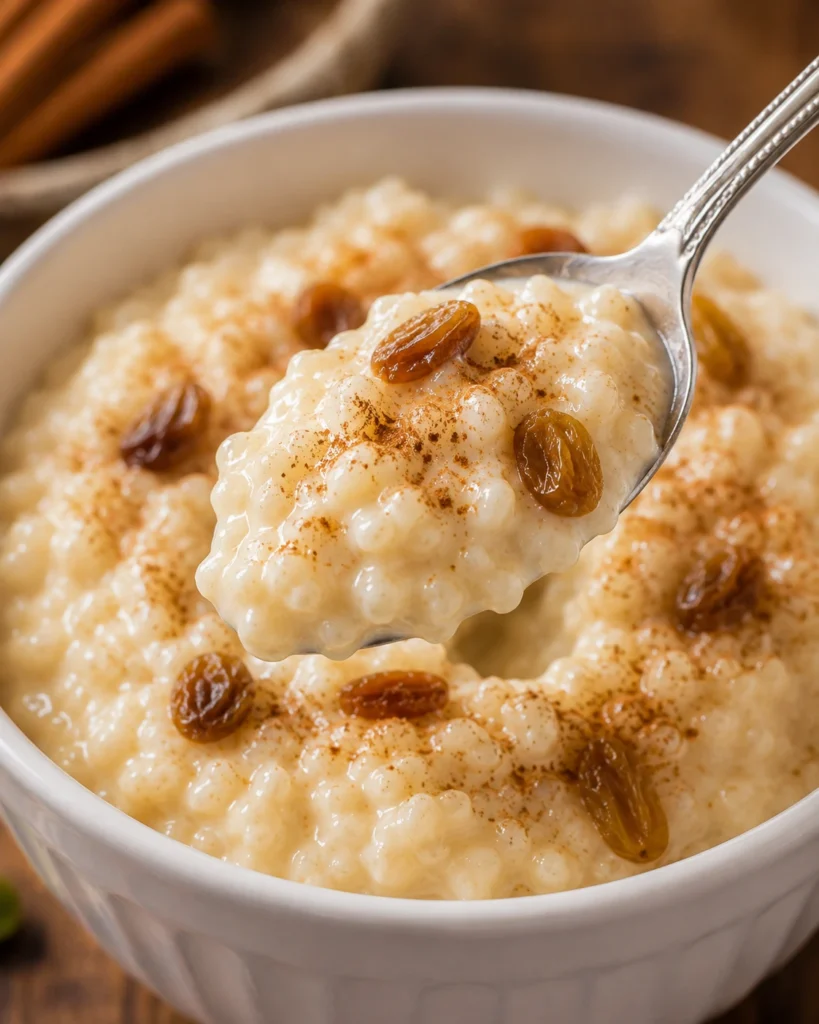
Let the pudding sit off the heat for 5 to 10 minutes to cool slightly and settle. Ladle into individual serving bowls. Garnish with a sprinkle of ground cinnamon and extra raisins or toasted nuts. Serve warm, at room temperature, or chilled!
Rice Pudding With Cooked Rice vs. Uncooked Rice
You can make rice pudding using either raw uncooked grains or leftover cooked rice:
- Uncooked Rice Method (This Recipe): Simmering raw rice directly in sweetened milk allows the grains to absorb rich dairy flavor to the core while releasing maximum natural starch into the sauce. This produces the creamiest, most cohesive pudding.
- Cooked Rice Shortcut Method: If you have leftover cooked white rice, combine 2 cups of cooked rice with 2 cups of whole milk, ⅓ cup sugar, and a pinch of salt. Simmer over medium-low heat for 15 to 20 minutes until thick and creamy, then finish with vanilla and cinnamon. This is a brilliant 20-minute hack for quick weeknight desserts!
How to Make Rice Pudding Creamy
To guarantee your pudding turns out silky and rich rather than dry or clumpy, follow these tested tips:
- Use a Heavy-Bottomed Pot: Thin pans create hot spots that burn milk before the rice cooks through. Cast iron or heavy tri-ply stainless steel distributes heat evenly.
- Simmer Low and Slow: Boiling milk rapidly breaks dairy proteins and evaporates liquid too quickly, leaving the rice grains hard. A gentle, low-heat simmer is key.
- Stir Constantly Near the End: As starch thickens the milk, grains tend to sink to the bottom. Regular stirring prevents sticking and builds a smooth emulsion.
- Don’t Over-Cook on the Stove: Remove the pot from heat when the pudding is still slightly loose and flowable. It absorbs residual liquid and thickens dramatically as it cools!
Troubleshooting Common Problems
Why Is My Rice Pudding Watery?
If your pudding looks runny after cooking, it simply needs more time! Simmer for an extra 5 to 10 minutes while stirring. Alternatively, remember that hot rice pudding thickens significantly as its temperature drops during a 10-minute resting period.
Why Is My Rice Pudding Too Thick?
Rice continues to absorb liquid even after cooling in the fridge. To fix over-thickened pudding, simply splash in 2 to 3 tablespoons of warm milk (or cream) and stir well before serving.
Why Did My Milk Scorch or Burn?
Milk burns easily when cooked over high heat or left unattended. Always cook on low heat, stir frequently with a flat-edged wooden spoon, and scrape the bottom corners of the pot.
Why Is My Rice Still Hard?
If the milk has evaporated but the rice is still crunchy, your stove heat was too high. Add ½ cup of warm milk, cover the pot with a lid for 5 minutes over low heat, and let the grains steam until tender.
Creative Recipe Variations
- Coconut Rice Pudding: Replace 2 cups of the whole milk with 1 can (13.5 oz) of full-fat unsweetened coconut milk. Garnish with toasted coconut flakes.
- Chocolate Rice Pudding: Whisk 3 tablespoons of cocoa powder into the milk along with the sugar, or stir in ½ cup of dark chocolate chips off the heat until melted.
- Arroz con Leche (Mexican Style): Simmer a cinnamon stick and a strip of lime peel with the milk. Stir in ½ cup of sweetened condensed milk during the last 10 minutes of cooking.
- Cardamom & Pistachio (Indian Style): Replace cinnamon with ½ teaspoon of ground cardamom and garnish with crushed green pistachios and rose petals.
- Dairy-Free / Vegan Version: Substitute whole milk with creamy oat milk or canned coconut milk.
How to Serve Rice Pudding
Rice pudding is incredibly versatile and can be served at different temperatures depending on the season:
- Warm: Serve straight from the pot on chilly winter nights, topped with a knob of butter, extra cinnamon, or warm berry compote.
- Chilled: Transfer to individual ramekins, cover with plastic wrap (pressed directly onto the surface to prevent a skin from forming), and chill for 2 to 3 hours. Serve cold topped with fresh raspberries, blueberries, or sliced bananas.
Storage & Reheating Instructions
Refrigerator Storage
Allow leftover rice pudding to cool to room temperature. Transfer to an airtight container and store in the refrigerator for up to 4 days.
How to Reheat Rice Pudding
- Microwave: Place a portion in a microwave-safe bowl, splash in 1 to 2 tablespoons of milk, and heat in 30-second bursts, stirring between intervals, until warm and creamy.
- Stovetop: Reheat gently in a small saucepan over low heat with a splash of extra milk, stirring constantly until warmed through.
Can You Freeze Rice Pudding?
Freezing is not recommended. Freezing causes dairy emulsions to separate upon thawing, resulting in a watery, grainy, and unappealing texture. It is best enjoyed fresh or stored in the fridge for up to 4 days.
Nutrition Information
Calculated for 1 serving (approx. 2/3 cup).
| Nutrient | Amount Per Serving |
|---|---|
| Calories | 220 kcal |
| Total Carbohydrates | 38 g |
| Dietary Fiber | 1 g |
| Sugars | 22 g |
| Protein | 6 g |
| Total Fat | 5 g |
| Saturated Fat | 3 g |
| Sodium | 140 mg |
Frequently Asked Questions
What is rice pudding made of?
Classic rice pudding is made of white rice, milk, sugar, salt, vanilla extract, and ground cinnamon.
What is the best rice for rice pudding?
Short-grain or medium-grain white rice (such as Arborio or Calrose) is best because its high starch content creates a naturally thick and creamy sauce.
Do you eat rice pudding hot or cold?
You can enjoy it either way! Warm rice pudding is cozy and comforting, while chilled rice pudding is refreshing and thick.
Can you make rice pudding without eggs?
Yes! Traditional stovetop rice pudding is naturally egg-free and relies entirely on rice starches to thicken the milk.
Can you make rice pudding with plant-based milk?
Yes! Full-fat oat milk or canned coconut milk work best as plant-based substitutes because they provide enough body and richness.
Rice Pudding vs. Rice Custard
| Feature | Stovetop Rice Pudding | Baked Rice Custard |
|---|---|---|
| Primary Thickener | Natural rice starches | Eggs and egg yolks |
| Cooking Method | Stovetop simmering in a pot | Oven baking in a water bath (bain-marie) |
| Texture | Creamy, flowable, with soft grains | Set, sliceable, or dense custard texture |
| Preparation Time | 40 minutes | 60–75 minutes |
Pro Tips
- Press Plastic Wrap on Top: If chilling pudding in the fridge, press a sheet of plastic wrap directly onto the surface of the pudding to stop a firm skin from forming.
- Finishing Splash of Milk: Always stir in a fresh splash (½ cup) of cold milk or cream right when you take the pot off the heat. This lowers the temperature instantly and stops the rice from overcooking.
- Toast the Spices: Lightly dusting ground cinnamon over warm pudding right before serving releases a far stronger aromatic aroma than just cooking it inside the pot.
Related Recipes
Complete your comfort food menu with these delicious dessert recipes: