
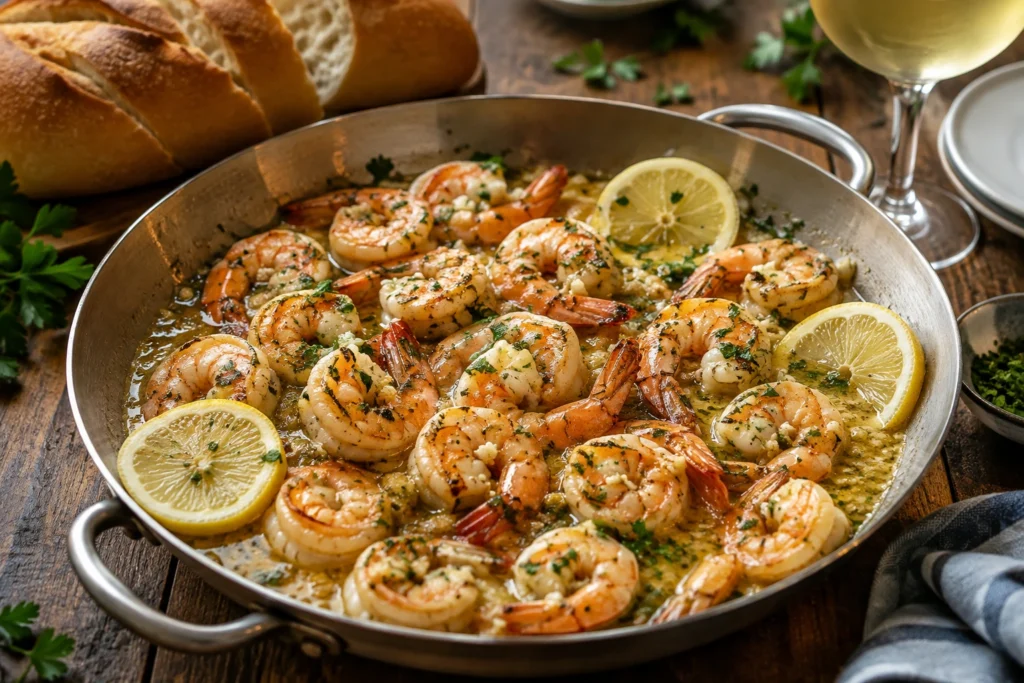
When I need a showstopping dinner on the table in under 20 minutes, my kitchen almost always smells like sizzling garlic, sweet butter, and fresh lemon. That is the magic of a classic shrimp scampi.
There is a reason this Italian-American restaurant staple has remained a timeless favorite for decades. It delivers an incredible depth of flavor with minimal active effort. The shrimp sear until plump and tender, while the pan juices transform into a silky, emulsified garlic-butter sauce that begs to be soaked up with a warm piece of crusty bread or tossed with delicate strands of angel hair pasta.
In this guide, I am sharing my tested, foolproof method for achieving restaurant-quality shrimp scampi at home. I will walk you through choosing the best shrimp, mastering the easy garlic-butter-lemon reduction, and avoiding the common pitfall of rubbery overcooked seafood.
More Dinner Recipes:
Recipe Quick Facts
| Recipe Details | Quick Information |
| Prep Time | 10 minutes |
| Cook Time | 10 minutes |
| Total Time | 20 minutes |
| Servings | 4 portions |
| Yield | 1 large pan (serves 4 with pasta) |
| Calories | 310 kcal per serving (shrimp & sauce) |
| Course | Main Course |
| Cuisine | Italian-American |
| Difficulty | Easy |
| Keywords | shrimp scampi recipe, easy shrimp scampi, garlic butter shrimp, lemon garlic shrimp |
Why You’ll Love This Recipe
- Ready in 20 Minutes: One of the absolute fastest main dishes you can cook from scratch.
- Simple Pantry Staples: Relies on fresh garlic, butter, olive oil, lemon, herbs, and a splash of wine or broth.
- Juicy, Plump Seafood: My two-step cooking method prevents the shrimp from becoming tough or rubbery.
- Incredible Flavor Balance: Rich, creamy butter is cut by bright, fresh lemon juice and fragrant garlic.
- Versatile Serving Options: Delicious on its own, tossed with pasta, spooned over rice, or served with crusty bread.
- One-Pan Cleanup: The entire sauce and shrimp assembly happens in a single skillet.
What Is Shrimp Scampi?
To understand this dish, it helps to know a bit of culinary history! In Italy, “scampi” refers to small, sweet crustaceans known as langoustines (Nephrops norvegicus). When Italian immigrants settled in the United States, langoustines were difficult to find, so they substituted readily available American shrimp while retaining the traditional Venetian preparation method—sautéing the seafood gently in olive oil, garlic, white wine, and butter.
Today, shrimp scampi refers to plump, tender shrimp cooked in an aromatic, emulsified sauce made of garlic, butter, white wine (or broth), lemon juice, and fresh parsley.
Ingredients You’ll Need
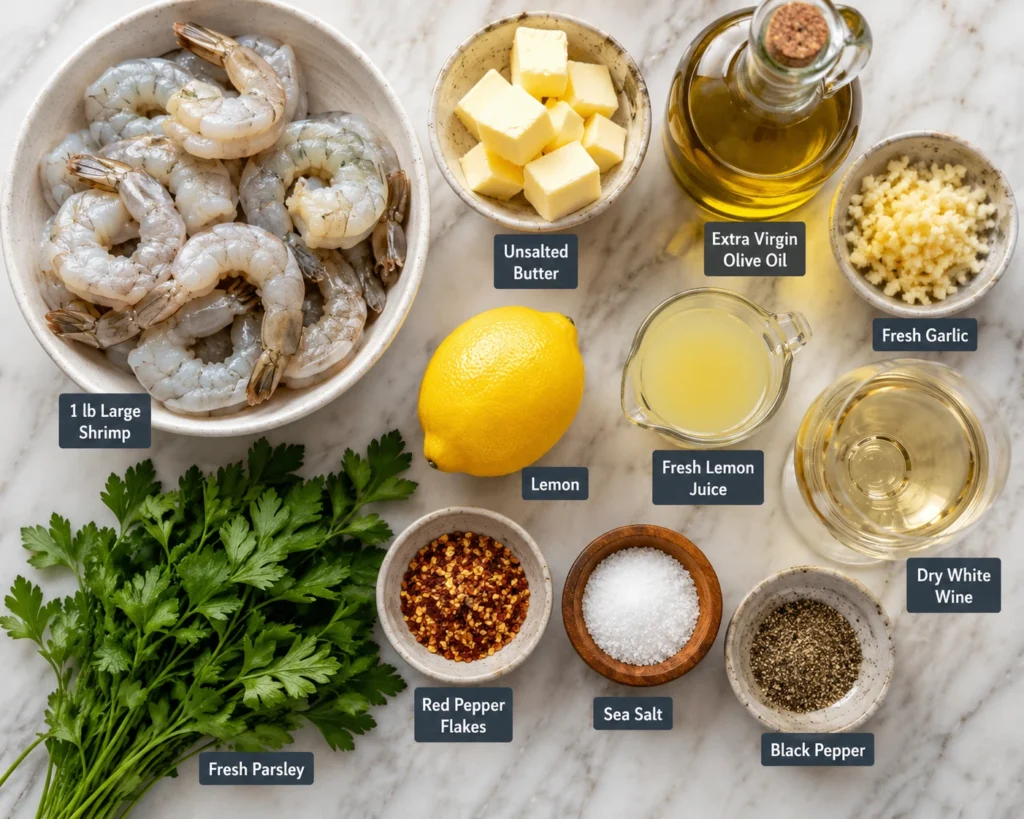
The Shrimp
- 1 ½ lbs large raw shrimp (21/25 count), peeled, deveined, with tails on or off
- ½ teaspoon fine sea salt
- ¼ teaspoon freshly cracked black pepper
The Scampi Sauce
- 2 tablespoons extra virgin olive oil
- 4 tablespoons unsalted butter, divided (2 tbsp for cooking, 2 tbsp cold for emulsifying)
- 5 cloves fresh garlic, finely minced
- ¼ teaspoon red pepper flakes (optional, for a subtle warmth)
- ⅓ cup dry white wine (such as Pinot Grigio or Sauvignon Blanc)
- 2 tablespoons freshly squeezed lemon juice (from 1 fresh lemon)
- 1 teaspoon fresh lemon zest
The Finishers & Garnishes
- ¼ cup fresh flat-leaf parsley, finely chopped
- Lemon wedges (for serving)
- Grated Parmigiano-Reggiano or Pecorino Romano (optional)
Ingredient Notes
- The Shrimp: Large (21/25 count) or Extra Large (16/20 count) raw shrimp yield the best texture. Larger shrimp sear nicely on the outside without overcooking in the middle. If using frozen shrimp, thaw them completely in the fridge overnight or in a sealed bag submerged in cold water before cooking.
- Fresh Garlic: Do not use pre-minced jarred garlic for scampi! Jarred garlic lacks the sharp, aromatic punch of fresh cloves and can impart a strange preserved metallic taste.
- Butter & Olive Oil: Combining olive oil with butter allows you to sear at a slightly higher temperature without burning the milk solids in the butter, while still delivering that rich, buttery flavor.
- White Wine: Select a dry, crisp white wine that you enjoy drinking, such as Pinot Grigio, Sauvignon Blanc, or a light Chardonnay. Avoid sweet wines (like Riesling) or cooking wines labeled “seasoned,” which contain high levels of sodium and additives.
- Fresh Lemon: Always squeeze fresh lemon juice! Bottled lemon juice lacks the bright, floral acidity of real fruit.
Easy Ingredient Substitutions
| Ingredient | Best Substitute | Notes |
| Dry White Wine | Low-sodium chicken or seafood stock | Add an extra ½ teaspoon of lemon juice to balance acidity. |
| Fresh Garlic | Garlic paste | Use 1 ½ teaspoons of garlic paste if fresh cloves aren’t available. |
| Unsalted Butter | Plant-based butter or extra olive oil | Use dairy-free butter to keep the recipe dairy-free. |
| Red Pepper Flakes | Pinch of cayenne pepper | Omit entirely if cooking for spice-sensitive guests. |
| Fresh Parsley | Fresh chives or basil | Add at the very end of cooking to maintain vibrant color. |
How to Make Shrimp Scampi
Step 1: Prepare and Season the Shrimp
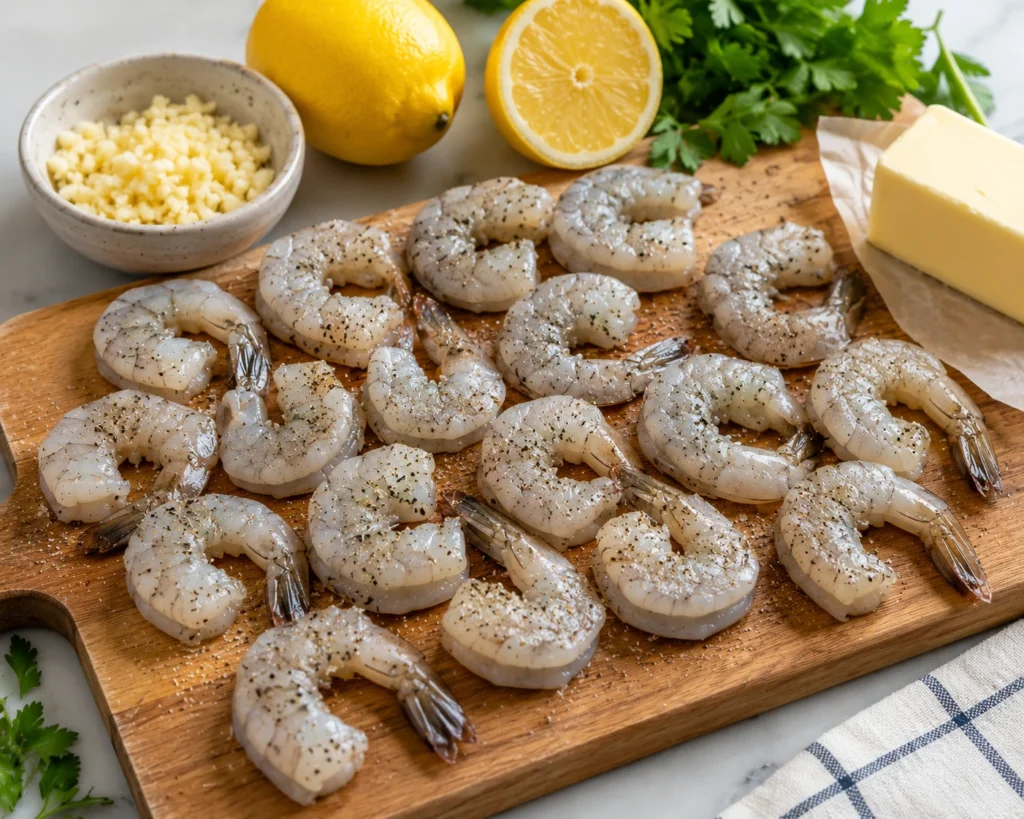
Pat the peeled and deveined shrimp thoroughly dry with paper towels. Removing surface moisture is critical for getting a nice sear rather than steaming the seafood. Season both sides with ½ teaspoon salt and ¼ teaspoon black pepper.
Step 2: Sear the Shrimp
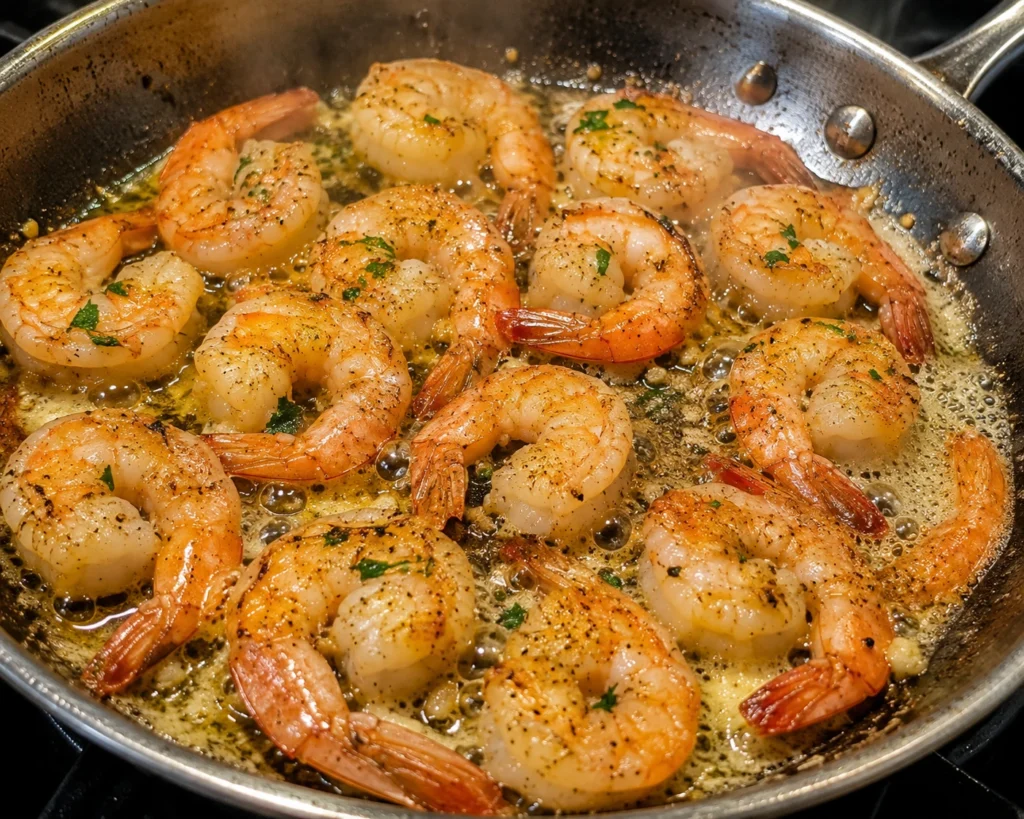
Heat 2 tablespoons of olive oil and 2 tablespoons of butter in a large 12-inch skillet over medium-high heat. Once the butter is melted and foaming, add the shrimp in a single, un-crowded layer. Cook for 1 to 2 minutes per side, just until the edges turn pink and translucent centers turn opaque. Immediately transfer the shrimp to a clean plate (they will finish cooking in the hot sauce later).
Step 3: Cook the Garlic and Spices
Reduce the skillet heat to medium. Add the minced garlic and red pepper flakes to the remaining oil in the pan. Cook for 30 to 60 seconds, stirring constantly with a wooden spoon until fragrant. Watch carefully—do not let the garlic brown or burn, or it will turn bitter.
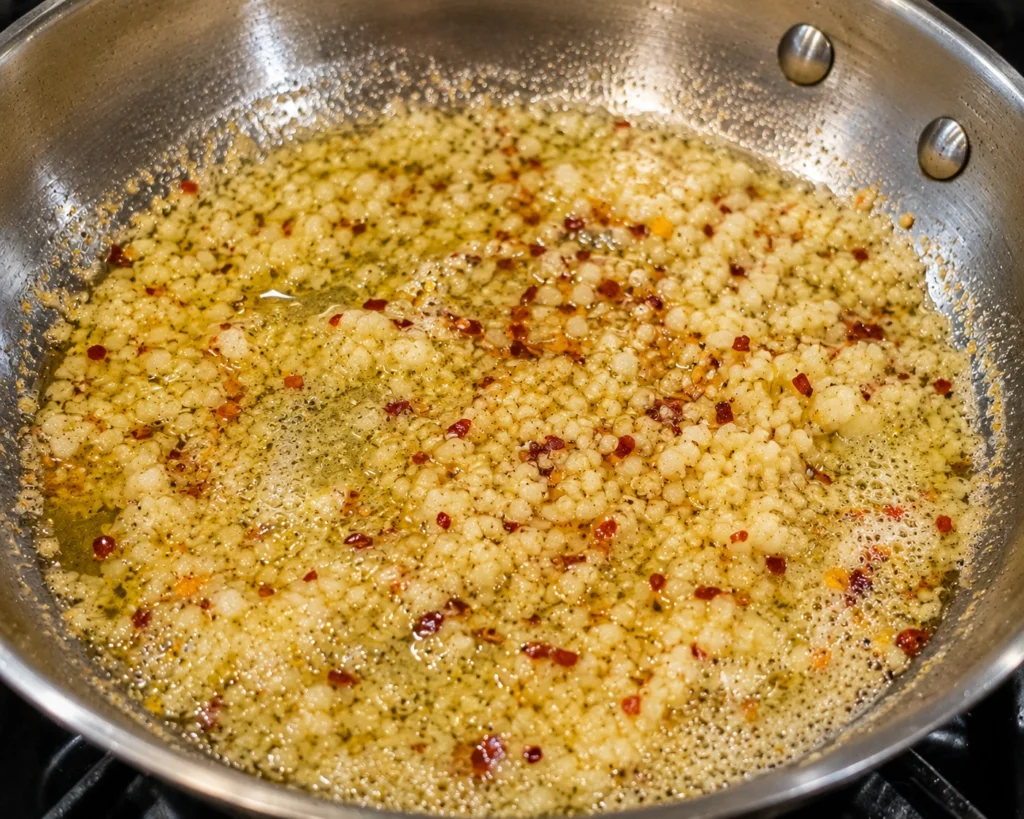
Step 4: Deglaze and Reduce the Sauce
Pour in ⅓ cup dry white wine (or chicken broth) and 2 tablespoons lemon juice. Use your spoon to scrape up any browned savory bits stuck to the bottom of the pan. Bring the liquid to a gentle simmer and let it reduce by half, about 2 to 3 minutes. Turn heat to low and swirl in the remaining 2 tablespoons of cold butter until it melts into a glossy, velvety emulsion.
Step 5: Return Shrimp and Toss
Add the cooked shrimp (and any accumulated juices from the plate) back into the simmering pan. Add 1 teaspoon lemon zest and the chopped fresh parsley. Toss everything together for 1 minute until the shrimp are warmed through and thoroughly coated in the silky garlic-butter reduction.
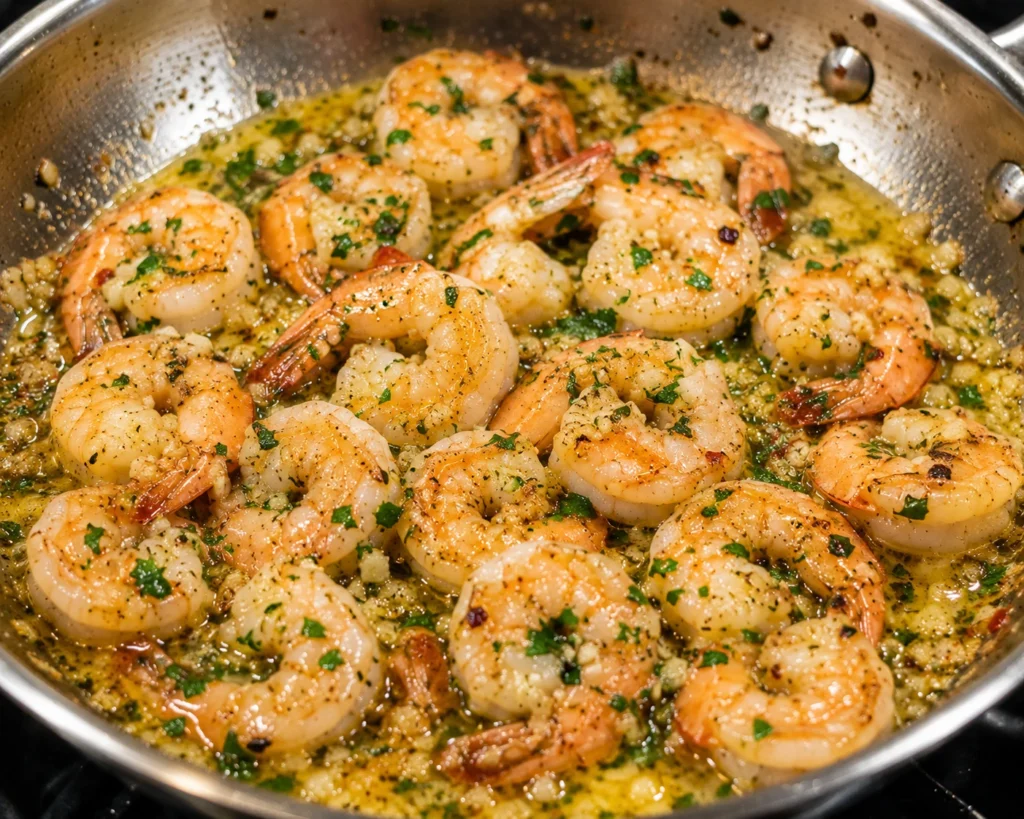
Step 6: Garnish and Serve
Remove from heat immediately. Taste the sauce and adjust with a pinch of salt, pepper, or an extra splash of lemon juice if desired. Garnish with fresh lemon wedges and serve warm!
How Do You Know When Shrimp Are Done?
Overcooking is the #1 mistake home cooks make with seafood. Because shrimp cook in mere minutes, keep an eye out for these visual cues:
- Shape Check: Perfect shrimp curl into a loose “C” shape. If they curl into a tight, closed “O” shape, they are overcooked and will taste rubbery!
- Color Check: The translucent, grayish flesh turns completely opaque pearly white in the center with pink and coral accents on the surface.
- Firmness: The flesh should feel springy and tender to the touch, not soft/mushy (undercooked) or hard/rubbery (overcooked).
How to Make Shrimp Scampi With Pasta
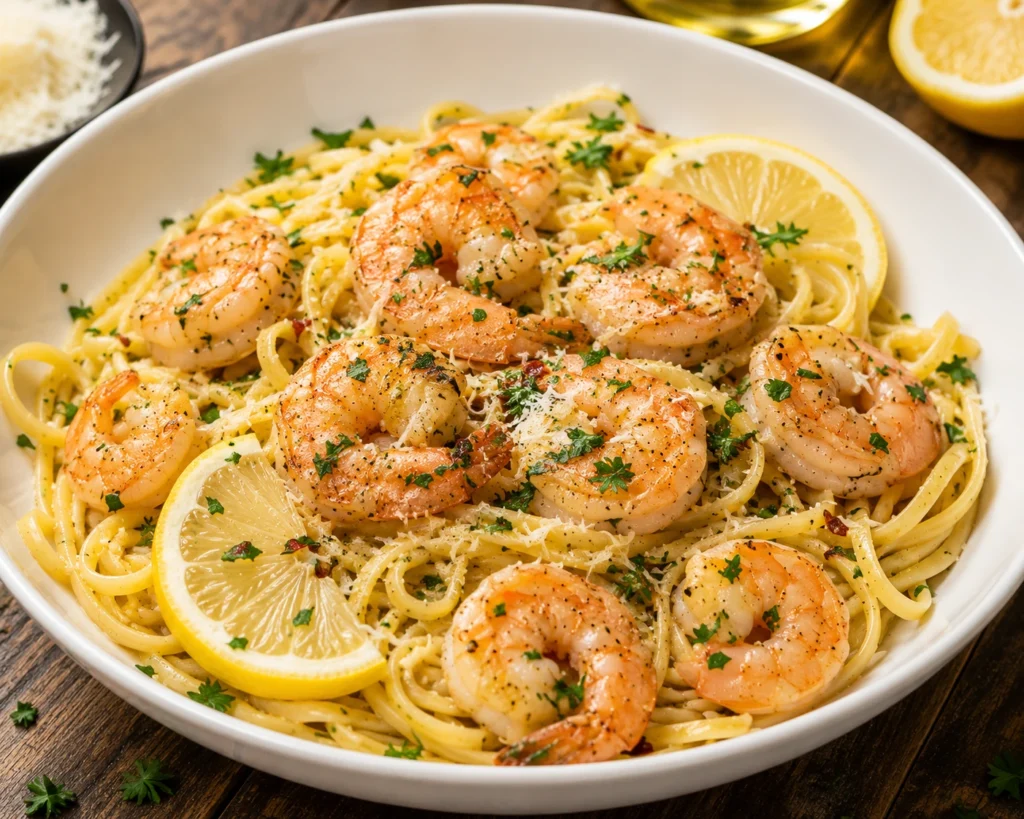
Shrimp scampi pairs naturally with long, delicate pasta like linguine, spaghetti, or angel hair. Here is how to combine them effortlessly:
- Boil the Pasta: Bring a large pot of salted water to a boil. Cook 8 oz of linguine or spaghetti until al dente according to package instructions.
- Reserve Pasta Water: Before draining, scoop out ½ cup of the starchy pasta water and set it aside.
- Make the Scampi: Cook the shrimp scampi as directed in the main recipe.
- Toss Together: Add the drained, warm pasta directly into the skillet with the finished shrimp scampi. Pour in 2 to 3 tablespoons of the reserved starchy pasta water.
- Emulsify: Toss vigorously over low heat for 1 minute. The starchy water will bind with the garlic butter, creating a silky sauce that clings to every strand of pasta. Finish with grated Parmesan cheese!
Can You Make Shrimp Scampi Without Wine?
Yes, absolutely! While wine adds a classic acidity and depth, you can make a delicious, family-friendly alcohol-free scampi.
Simply substitute the ⅓ cup of white wine with an equal amount of low-sodium chicken broth or seafood stock. Because wine is naturally more acidic than stock, compensate by adding an extra ½ teaspoon of fresh lemon juice or a dash of white wine vinegar to keep the sauce bright and balanced.
Easy Shrimp Scampi Variations
- Creamy Shrimp Scampi: Stir 3 tablespoons of heavy whipping cream into the wine-lemon reduction right before returning the shrimp to the pan for a decadent, velvety sauce.
- Spicy Scampi (Scampi Fra Diavolo): Increase the red pepper flakes to 1 teaspoon and add 1 tablespoon of sun-dried tomato paste or diced Calabrian chilis to the garlic oil.
- Vegetable-Boosted Scampi: Fold in 2 cups of fresh baby spinach, halved cherry tomatoes, or tender asparagus spears during the last 2 minutes of simmering until wilted.
- Parmesan Crust Scampi: Transfer the cooked scampi to an oven-safe baking dish, top with a mixture of panko breadcrumbs, melted butter, and Parmesan cheese, and broil for 2 minutes until golden-crisp.
What to Serve With Shrimp Scampi
Because the garlic-butter-lemon pan sauce is so rich and flavorful, pair it with sides that soak up sauce or balance richness:
- Breads: Warm crusty French baguette, ciabatta, or homemade garlic bread.
- Grains & Pasta: Linguine, angel hair, fettuccine, jasmine rice, or creamy garlic polenta.
- Green Vegetables: Roasted asparagus, steamed broccoli florets, charred zucchini, or sauteed green beans.
- Salads: A crisp Caesar salad or a peppery arugula salad dressed with a light lemon vinaigrette.
Tips for the Best Shrimp Scampi
- Pat the Shrimp Completely Dry: Wet shrimp drop the pan temperature and steam instead of searing.
- Cook in Batches if Needed: Overcrowding the pan lowers the surface heat. Give your shrimp breathing room so they cook evenly.
- Keep Garlic on Low Heat: Garlic burns in seconds over high heat. Keep the burner on medium-low when sautéing minced garlic to prevent a bitter flavor.
- Use Cold Butter at the End: Swirling cold cubed butter into the warm reduced sauce at the very end creates a smooth, glossy emulsion that won’t separate into an oily mess.
- Serve Immediately: Seafood continues to cook off the heat, so serve the dish piping hot straight out of the pan.
Common Shrimp Scampi Mistakes
- Overcooking the Shrimp: Leaving the shrimp in the pan while reducing the sauce guarantees rubbery seafood. Always remove the shrimp to a plate while building the sauce!
- Burning the Garlic: Burnt garlic ruins an entire batch of sauce. If your garlic turns dark brown, wipe out the pan and start fresh.
- Using Too Much Lemon Juice: Too much citrus can overpower the sweet seafood flavor and turn the sauce unpleasantly tart. Stick to 2 tablespoons during cooking and serve extra lemon wedges on the side.
- Skipping Salt: Seafood needs proper seasoning. Ensure both your raw shrimp and your pan sauce are seasoned adequately with sea salt.
Storage and Reheating Instructions
How to Store Leftovers
Store leftover shrimp scampi in an airtight container in the refrigerator for up to 2 days. Because cooked seafood deteriorates quickly, enjoy leftovers promptly.
How to Reheat Gently
Avoid the microwave if possible, as it will make the shrimp rubbery!
- Skillet Method (Recommended): Place leftovers in a small skillet over low heat. Add 1 tablespoon of water, broth, or butter to replenish moisture. Cover and heat gently for 3 to 4 minutes, stirring once, until just warmed through.
Can You Freeze Shrimp Scampi?
Freezing cooked shrimp scampi is not recommended. The delicate emulsion of butter, lemon, and white wine tends to separate and turn grainy upon thawing, and frozen cooked shrimp become tough when reheated.
Can You Make Shrimp Scampi Ahead of Time?
While the dish cooks too quickly to fully make hours in advance, you can do all the prep work ahead of time:
- Up to 1 Day Ahead: Peel, devein, and dry the shrimp. Store covered in the fridge.
- Prep the Aromatics: Mince the garlic, chop the fresh parsley, zest and juice the lemon, and measure out the wine, oil, and butter.
- At Dinner Time: Cook the dish fresh in just 10 minutes!
Frequently Asked Questions
What is shrimp scampi sauce made of?
Classic scampi sauce is made of extra virgin olive oil, melted butter, minced garlic, dry white wine, fresh lemon juice, lemon zest, red pepper flakes, and fresh parsley.
What pasta goes best with shrimp scampi?
Long, thin pasta shapes like linguine, spaghetti, or angel hair work best because they allow the light garlic-butter sauce to coat every strand evenly.
Can I use frozen shrimp for scampi?
Yes! Thaw the frozen shrimp completely in the refrigerator overnight, or place them in a sealed zip-top bag and submerge in cold tap water for 15 minutes. Pat thoroughly dry before cooking.
Can I use pre-cooked shrimp?
Raw shrimp are strongly preferred because pre-cooked shrimp will easily overcook and turn tough when heated in the pan sauce. If you must use pre-cooked shrimp, add them at the very end for 30 seconds just to warm through.