
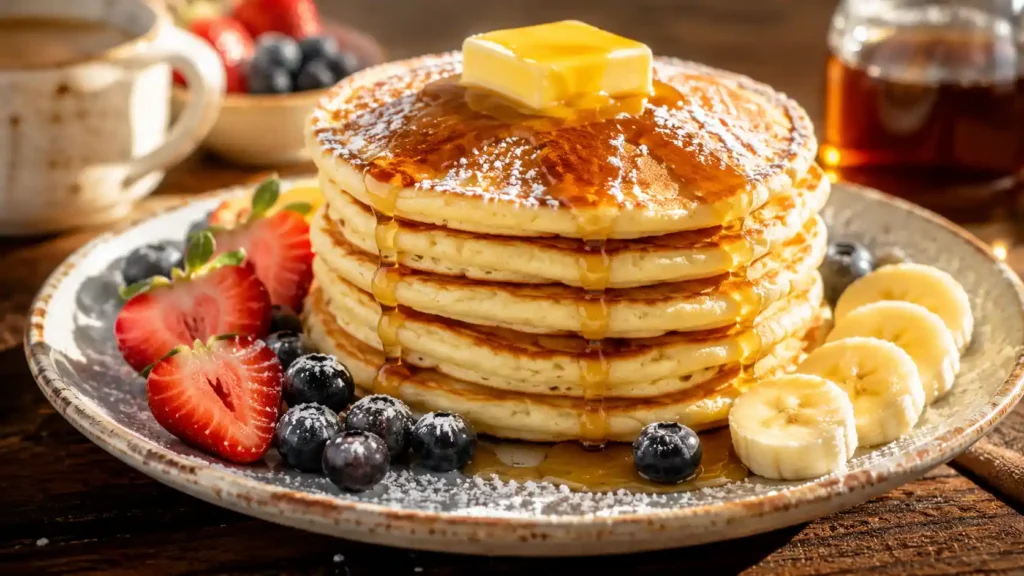
There is something purely comforting about waking up on a quiet weekend morning to the rich aroma of butter sizzling on a hot skillet and maple syrup warming on the stove. While boxed pancake mixes promise convenience, they often deliver flat, rubbery cakes that lack depth, richness, and that coveted melt-in-your-mouth tender crumb. Learning how to cook a true Pancake Recipe from scratch is one of the single best culinary upgrades you can make to your morning routine.
Making restaurant-quality fluffy pancakes at home is surprisingly simple and requires no specialized baking gear. By bringing together a handful of basic pantry staples—flour, sugar, baking powder, milk, butter, and eggs—you can whip up a batch of warm, golden-brown cakes that rival your favorite diner in just 25 minutes.
This easy pancake recipe is designed for foolproof success, whether you are cooking a lazy Sunday morning breakfast for your family, hosting a holiday brunch, or looking for a quick meal prep idea to stock your freezer. Soft, pillowy, and lightly sweet, these homemade pancakes serve as the perfect canvas for everything from pure maple syrup and melted butter to fresh summer berries and toasted nuts.
Quick Recipe Card
Here is a quick overview of everything you need to know before heating up your skillet.
| Detail | Information |
| Recipe Name | Classic Homemade Pancake Recipe |
| Cuisine | American |
| Course | Breakfast / Brunch |
| Prep Time | 10 Minutes |
| Cook Time | 15 Minutes |
| Total Time | 25 Minutes |
| Servings | 8 Pancakes (Serves 4) |
| Calories | Approx. 185 kcal per pancake |
| Difficulty | Easy |
Why You’ll Love This Recipe
- Pillowy and soft every time: Engineered with the ideal wet-to-dry ratio to yield thick, golden, cloud-like pancakes.
- Ready in under 25 minutes: Fast prep time makes scratch baking completely doable even on busy mornings.
- 100% everyday pantry ingredients: No trips to specialty stores needed; you likely have every single ingredient in your kitchen right now.
- Beginner-friendly: Simple step-by-step techniques ensure perfect results even if you have never baked from scratch.
- A true family favorite: Loved by toddlers, teens, and adults alike—making it an instant weekend tradition.
- Freezer and meal-prep friendly: Bakes up in bulk, freezes like a dream, and reheats back to fluffy perfection in seconds.
- Infinitely customizable: Easily adapt the batter for blueberries, chocolate chips, bananas, or dietary substitutions.
What Makes Pancakes Fluffy?
Achieving that towering, diner-style fluffiness is not a matter of luck—it comes down to basic food science and a few crucial steps in batter handling.
1. Fresh Leavening Agents
Baking powder is the heart of a fluffy pancake. When exposed to liquid and heat, baking powder produces thousands of microscopic carbon dioxide gas bubbles inside the batter. As the batter cooks on the hot skillet, these bubbles expand, lifting the dough into a tall, pillowy cake.
2. Gentle Mixing (The Golden Rule)
Gluten develops when wheat flour comes into contact with liquid and is stirred. Excess stirring creates long, elastic gluten strands—terrible for pancakes! Overmixed batter leads to tough, chewy, and flat cakes. Stirring just until the dry ingredients are moistened keeps the gluten structure soft and tender.
3. Batter Consistency and Resting
A batter that is too runny spreads quickly across the pan, cooking into thin, crepe-like discs. A thick batter holds its shape, allowing those gas bubbles to push the pancake upward instead of outward. Resting the batter for 5 to 10 minutes lets the flour hydrate fully and gives the baking powder time to start forming bubbles before hit by heat.
4. Controlled Heat
If your pan is too hot, the exterior will crisp up and brown before the inside has time to rise and set, leaving you with a burnt crust and raw dough in the middle. Medium to medium-low heat gives the batter time to expand fully while building a light, golden crust.
Best Flour for Pancakes
The flour you choose forms the backbone of your pancake structure. Here is how common options compare for breakfast baking:
| Flour Type | Texture Result | Structure & Lift | Overall Recommendation |
| All-Purpose Flour | Soft, light, tender crumb | Excellent natural rise | Best Overall Standard |
| Self-Rising Flour | Very fluffy, light | High (contains salt/leavening) | Great (Omit baking powder/salt) |
| Whole Wheat Flour | Dense, nutty, slightly dry | Moderate to heavy rise | Good (Best mixed 50/50 with AP) |
| Gluten-Free 1:1 Blend | Soft, slightly delicate | Good (Requires xanthan gum) | Best Gluten-Free Option |
| Cake Flour | Extremely delicate, fragile | Low to moderate rise | Too soft (Pancakes can collapse) |
Why All-Purpose Flour Wins: All-purpose flour strikes the ideal balance of protein (around 10–12%). It offers enough structure to hold those expanding gas bubbles without making the finished pancake dense or chewy.
Ingredients
To make this classic Pancake Recipe, collect these basic kitchen staples:
| Ingredient | Quantity | Purpose |
| All-Purpose Flour | 2 cups (240g) | Provides the main structure and soft crumb for the pancakes. |
| Baking Powder | 2 tbsp (24g) | The primary leavening agent responsible for tall, fluffy lift. |
| Granulated Sugar | 2 tbsp (25g) | Adds subtle sweetness and helps caramelize the edges golden brown. |
| Fine Sea Salt | ½ tsp | Balances the sweetness and enhances the rich flavor of butter and vanilla. |
| Milk (Whole or 2%) | 1½ cups (360ml) | Hydrates the dry ingredients; full-fat milk yields the richest crumb. |
| Large Egg | 1 room temperature | Binds the structure, adds richness, and aids in leavening. |
| Unsalted Butter | ¼ cup (56g / 4 tbsp) | Melted and slightly cooled; adds moisture and rich bakery flavor. |
| Pure Vanilla Extract | 1 tsp | Infuses warm aroma and classic diner-style flavor. |
Ingredient Notes
Flour & Leavening
- All-Purpose Flour: Always fluff your flour with a fork before measuring, then scoop it lightly into your measuring cup and level it off with a knife. Packing flour tightly into a cup adds up to 25% extra flour, making batter thick and pancakes dry.
- Baking Powder: Double-check the expiration date on your baking powder tin! Old baking powder loses its gas-producing punch, resulting in flat, rubbery cakes. (Two tablespoons may seem generous, but it is the exact secret to diner-style height).
Dairy & Fats
- Milk: Whole milk produces the richest, softest interior, but 2%, oat milk, or almond milk work nicely too.
- Butter: Using melted butter directly in the batter provides far better moisture and flavor than vegetable oil. Make sure your melted butter cools for a few minutes before whisking into the egg and milk so it doesn’t scramble the egg.
Sweetener & Aromatics
- Sugar: Just two tablespoons of sugar gives a hint of sweet background note while encouraging that beautiful golden-brown color when the batter hits the hot skillet.
- Vanilla Extract: Pure vanilla extract lifts simple pantry ingredients into something that tastes special and bakery-fresh.
Equipment Needed
- Large & Medium Mixing Bowls: For separating dry and wet ingredients before combining.
- Whisk: Ensures baking powder and salt are evenly distributed throughout the flour.
- Rubber Spatula: Ideal for gently folding wet and dry ingredients together without overmixing.
- Non-Stick Skillet or Cast-Iron Griddle: A flat, non-stick surface or well-seasoned cast iron ensures even heat distribution and clean flipping.
- Flexible Flat Spatula (Turner): Wide enough to slide under pancakes easily without tearing them.
- Measuring Cups & Spoons: For accurate proportions.
- Ladle or ¼-Cup Measuring Cup: Yields uniformly sized 4-inch pancakes every single time.
Ingredient Substitutions
- Buttermilk Swap: To convert this into a traditional buttermilk pancake recipe, replace 1½ cups of regular milk with 1½ cups of real buttermilk. (Or make quick homemade buttermilk by adding 1½ tablespoons of fresh lemon juice or white vinegar to whole milk and letting it sit for 5 minutes).
- Dairy-Free Option: Swap whole milk with unsweetened oat milk or almond milk, and use melted coconut oil or vegan butter in place of dairy butter.
- Egg-Free Alternative: Replace the egg with ¼ cup of unsweetened applesauce, half a mashed ripe banana, or a commercial egg replacer.
- Gluten-Free Version: Use a high-quality 1:1 gluten-free measure-for-measure baking flour that includes xanthan gum.
- Unrefined Sweetener: Swap white granulated sugar with pure maple syrup, honey, or coconut sugar.
Step-by-Step Instructions
Step 1: Combine Dry Ingredients
Image suggestion: Sifting or whisking flour, baking powder, sugar, and salt together in a large glass mixing bowl.
Detail: In a large mixing bowl, whisk together 2 cups of all-purpose flour, 2 tablespoons of baking powder, 2 tablespoons of sugar, and ½ teaspoon of salt until thoroughly blended.
Tip: Whisking dry ingredients first eliminates lumps of baking powder and ensures every pancake rises evenly.
Step 2: Whisk Wet Ingredients
Image suggestion: Whisking milk, room-temperature egg, melted butter, and vanilla extract together in a liquid measuring cup.
Detail: In a separate medium bowl or liquid measuring cup, whisk together 1½ cups of milk, 1 large egg, ¼ cup of melted (and cooled) butter, and 1 teaspoon of vanilla extract until fully blended and smooth.
Step 3: Combine Wet and Dry (Do Not Overmix!)
Image suggestion: Pouring the wet mixture into the dry ingredients and folding gently with a rubber spatula, leaving small lumps in the batter.
Detail: Pour the wet ingredient mixture into the bowl with the dry ingredients. Using a rubber spatula or wooden spoon, fold the mixture together gently just until combined. Stop as soon as the dry flour streaks disappear.
Crucial Step: The batter should be thick and visibly lumpy! Do not try to whisk it completely smooth.
Step 4: Rest the Batter
Image suggestion: The pancake batter resting undisturbed in a bowl, with tiny gas bubbles forming on the surface.
Detail: Set the bowl of batter aside at room temperature to rest for 5 to 10 minutes. Use this time to preheat your cooking surface. Resting allows the flour to absorb moisture and lets the baking powder begin activating, creating tiny air pockets.
Step 5: Preheat and Grease the Skillet
Image suggestion: Lightly wiping a non-stick skillet or flat cast-iron griddle with a butter-coated paper towel over medium heat.
Detail: Heat a non-stick skillet or electric griddle over medium heat (around 350°F / 175°C for electric griddles). Lightly brush the surface with a tiny bit of extra butter or vegetable oil, then wipe off any excess with a paper towel so only a thin sheen remains.
Tip: Too much melted butter pooled in the pan burns easily and leads to spotty, uneven browning.
Step 6: Pour the Batter
Image suggestion: Using a ¼-cup measuring cup to scoop thick batter onto a hot skillet, forming neat round 4-inch circles.
Detail: Scoop ¼ cup of batter onto the hot skillet for each pancake, leaving about 2 inches of space between them so they have room to expand.
Step 7: Watch for Bubbles and Flip
Image suggestion: A pancake cooking on a skillet, showing popped bubbles across the surface and dry, set edges ready for flipping.
Detail: Cook undisturbed for 2 to 3 minutes. Look for bubbles rising to the surface and popping, leaving tiny holes that stay open. The edges of the pancake should look set and matte (no longer glossy). Slide your spatula under the pancake, check that the bottom is golden brown, and flip gently in one fluid motion.
Step 8: Cook Second Side and Serve
Image suggestion: Flipping the pancake to reveal a golden-brown side, then stacking finished warm pancakes on a ceramic plate.
Detail: Cook the second side for another 1 to 2 minutes until golden brown and cooked through in the center. Transfer cooked pancakes to a warm plate and repeat with remaining batter. Serve warm with butter and maple syrup!
Pro Tips for Perfect Pancakes
- Test your pan temperature first: Before cooking a full batch, drop a tiny spoonful of batter onto the pan. If it browns instantly, your heat is too high. If it sits for a minute without sizzling, your pan is too cold.
- Resist the urge to press down with your spatula: Never press flat on a cooking pancake with your spatula! Pressing squeezes out trapped air bubbles, ruining all the hard work your baking powder did to make them fluffy.
- Flip only ONCE: Repeated flipping knocks out trapped air, cools down the cake, and results in a dense, tough texture.
- Wipe the skillet between batches: As you cook multiple rounds, residual butter or stray bits of batter left in the pan can burn. Wipe the pan clean with a paper towel every 2 batches and re-grease lightly.
- Keep pancakes warm in the oven: If cooking for a crowd, preheat your oven to 200°F (95°C). Place a wire cooling rack inside a rimmed baking sheet in the oven. As pancakes come off the skillet, lay them in a single layer on the rack. They will stay hot, crisp, and fluffy without sweating or going soggy.
Common Mistakes to Avoid
- Overmixing the batter until smooth: Overmixing creates heavy gluten bonds. Embrace the lumps—they break down naturally during the cooking process.
- Cooking over high heat: High heat sears the outside instantly while leaving the center raw and gooey. Low-and-slow medium heat guarantees even cooking from edge to center.
- Flipping too early or too late: Flipping before bubbles pop and edges set causes batter to splatter across the pan. Waiting too long burns the bottom.
- Using cold wet ingredients: Cold milk and eggs directly from the fridge can re-solidify melted butter into tiny greasy specks. Bring your milk and egg closer to room temperature before mixing.
- Pouring batter into a cold pan: Batter poured into an unheated skillet absorbs oil/butter and cooks unevenly without getting that initial rise. Always preheat your pan thoroughly!
Recipe Variations
Buttermilk Pancakes
Swap milk for 1½ cups of rich buttermilk and add ½ teaspoon of baking soda to the dry mix to neutralize the acidity and unlock ultra-tender texture.
Blueberry Pancakes
Once you pour ¼ cup of batter onto the hot skillet, scatter 8–10 fresh or frozen blueberries directly on top of the raw batter before flipping. (Mixing berries into the main bowl stains the whole batter purple).
Chocolate Chip Pancakes
Fold ½ cup of mini semi-sweet chocolate chips into the batter right at the end of mixing. Top cooked pancakes with extra chocolate chips and whipped cream.
Banana Nut Pancakes
Fold ½ cup of finely sliced bananas and ¼ cup of toasted chopped walnuts or pecans into the batter. Serve topped with sliced fresh banana and warm maple syrup.
Whole Wheat Pancakes
Replace half of the all-purpose flour (1 cup) with whole wheat flour for a heartier, nuttier taste packed with extra fiber.
Cinnamon Roll Pancakes
Swirl a simple mixture of 3 tablespoons melted butter, ¼ cup brown sugar, and 1 teaspoon cinnamon onto the uncooked pancake surface using a piping bag while on the skillet before flipping.
Delicious Pancake Toppings
Build your ultimate breakfast stack with these topping ideas:
- Classic Sweet: 100% pure warm maple syrup, salted butter, raw honey, or agave nectar.
- Fresh Fruit: Strawberries, raspberries, blackberries, sliced bananas, or caramelized apples.
- Creamy Delights: Freshly whipped cream, vanilla Greek yogurt, mascarpone cheese, or cottage cheese.
- Rich Spreads: Nutella, creamy peanut butter, almond butter, or cookie butter (Biscoff).
- Crunchy Texture: Chopped toasted pecans, sliced almonds, walnuts, or toasted coconut flakes.
- Sauces: Warm berry compote, chocolate fudge sauce, lemon curd, or salted caramel drizzle.
What to Serve with Pancakes
Turn your stack of pancakes into a memorable, well-balanced breakfast or brunch spread by adding these classic savory and sweet sides:
- Crispy Bacon or Sausage: Savory, salty meats like strips of thick-cut bacon or breakfast sausage links balance the sweet maple syrup perfectly.
- Eggs Any Style: Pair with fluffy soft-scrambled eggs, poached eggs, or sunny-side-up eggs.
- Breakfast Potatoes: Serve alongside crispy skillet breakfast potatoes or golden hash browns.
- Fresh Fruit Salad: A bright bowl of fresh melon, citrus segments, and grapes adds a light, refreshing touch.
- Morning Beverages: Pair with hot dark roast coffee, a creamy espresso latte, fresh orange juice, or a nutrient-dense Breakfast Smoothie Recipe.
Make-Ahead & Meal Prep Tips
- Batch Cooking: Double or triple this recipe on Sunday morning. Cook all pancakes, let them cool completely, and store them for quick weekday mornings.
- Batter Prep Limits: Pancake batter made with baking powder is best cooked fresh. If you must prepare it ahead, store wet and dry ingredients separately overnight, then fold them together 10 minutes before cooking in the morning.
Storage & Freezing Instructions
Refrigerator Storage
Store fully cooled pancakes in an airtight container or sealable zip-top bag with parchment paper between layers to prevent sticking. Refrigerate for up to 4 days.
Freezing Pancakes (Best Method)
- Allow cooked pancakes to cool down completely to room temperature on a wire rack. (Warm pancakes create condensation, leading to freezer burn and ice crystals).
- Lay cooled pancakes in a single layer on a parchment-lined baking sheet and flash-freeze for 1 hour until firm.
- Transfer frozen pancakes into a heavy-duty freezer bag, squeezing out excess air. Freeze for up to 3 months.
Reheating Tips
Restoring leftover pancakes to their fresh-out-of-the-skillet texture is fast and easy using these methods:
- Toaster (Best & Fastest): Pop frozen or refrigerated pancakes directly into your toaster on a medium setting. They warm through evenly with lightly crisp edges in just 1 to 2 minutes.
- Oven / Toaster Oven: Arrange pancakes in a single layer on a baking sheet, cover loosely with foil (to prevent drying), and bake at 350°F (175°C) for 6–8 minutes (or 10 minutes from frozen).
- Microwave (Softest): Stack 2 to 3 pancakes on a paper towel-lined plate and microwave on high for 30 to 45 seconds. (Note: Microwaving makes them warm and soft, but not crisp).
- Skillet: Reheat pancakes on a dry non-stick skillet over medium-low heat for 1 minute per side.
Nutrition Information
Note: Nutrition values are estimates calculated per pancake (out of 8 pancakes total) using whole milk and unsalted butter without extra maple syrup or toppings.
| Nutrient | Amount per Pancake |
| Calories | ~ 185 kcal |
| Carbohydrates | 25 g |
| Protein | 5 g |
| Total Fat | 7 g |
| Saturated Fat | 4 g |
| Cholesterol | 35 mg |
| Fiber | 1 g |
| Sugar | 4 g |
| Sodium | 340 mg |
| Potassium | 165 mg |
Frequently Asked Questions
1. Why aren’t my pancakes fluffy?
Flat pancakes are usually caused by expired baking powder, overmixing the batter (which creates tough gluten), or using a batter that is too thin and runny. Ensure your baking powder is fresh and fold batter gently!
2. Can I make pancake batter without eggs?
Yes! You can substitute the egg with ¼ cup of unsweetened applesauce, half a mashed ripe banana, or 3 tablespoons of milk combined with 1 tablespoon of extra melted butter.
3. How thick should my pancake batter be?
Pancake batter should be thick enough that it slowly drops off a spoon rather than pouring like water, but thin enough that it spreads gently into a 4-inch circle on the skillet. If too thick, add 1 tablespoon of milk; if too runny, whisk in 1 tablespoon of flour.
4. Can I freeze cooked pancakes?
Yes! Flash-freeze cooled pancakes on a baking sheet for an hour, then stack them separated by parchment paper inside a freezer bag. Freeze for up to 3 months and reheat in a toaster.
5. Why are my pancakes rubbery and tough?
Rubbery pancakes are the direct result of overmixing. When flour is stirred too vigorously, gluten develops into tight, elastic chains. Mix wet and dry ingredients just until combined, leaving visible lumps.
6. Can I use self-rising flour for pancakes?
Yes! If using self-rising flour, omit the baking powder and salt called for in the recipe, as self-rising flour already contains leavening agents and salt.
7. How do I know when it is time to flip a pancake?
Flip when bubbles rise to the surface of the pancake and pop, leaving open holes, while the edges turn set, firm, and matte rather than wet and shiny.
8. Can I make pancake batter the night before?
It is not recommended to mix the wet and dry ingredients the night before because baking powder activates as soon as it touches liquid. For easy mornings, whisk dry ingredients together in a bowl, mix wet ingredients in a jar, and combine them fresh in the morning.
9. What is the best pan to use for cooking pancakes?
A large non-stick skillet or a heavy cast-iron griddle works best. Cast iron holds steady, even heat, while non-stick pans guarantee effortless flipping with minimal butter.
10. Why are my pancakes burning on the outside but raw in the middle?
Your heat setting is too high! Lower your stove to medium or medium-low heat. This allows the heat to penetrate to the center of the cake before the exterior browns excessively.
11. Can I use whole wheat flour instead of all-purpose flour?
Yes, but using 100% whole wheat flour can make pancakes dense and heavy. For best results, use a 50/50 split of whole wheat flour and all-purpose flour.
12. Can kids help make this recipe?
Absoutely! Kids love measuring dry ingredients, whisking wet ingredients, and carefully dropping blueberries or chocolate chips onto cooking batter. (Supervise closely around hot skillets).
13. How do I keep cooked pancakes warm while finishing the batch?
Place cooked pancakes in a single layer on a wire cooling rack set inside a baking sheet in a preheated 200°F (95°C) oven until you are ready to serve.
14. Can I make this pancake recipe gluten-free?
Yes. Swap the all-purpose flour 1:1 with a high-quality gluten-free measure-for-measure baking flour blend containing xanthan gum.
15. Can I use oil instead of butter in the pancake batter?
Yes, neutral vegetable oil or melted coconut oil works fine, but butter provides significantly better richness and flavor.
Related Recipes
Discover more breakfast classics on DishFry.com:
- Creamy 5-Minute Breakfast Smoothie – Quick fruit and oat smoothie for busy mornings.
- Healthy Grab-and-Go Breakfast Cookies – Soft, chewy oat cookies packed with nuts.
- Moist Banana Bread Recipe – Traditional homemade loaf made with ripe bananas.
- Protein Pancakes Recipe – Fluffy, high-protein flapjacks for post-workout fuel.
- Easy Overnight Oats Recipe – Creamy prep-ahead oats with berries and maple syrup.
- Greek Yogurt Parfait Recipe – Crunchy granola layered with yogurt and fruit.
Printable Recipe Card
Classic Fluffy Homemade Pancakes
Prep Time: 10 mins | Cook Time: 15 mins | Total Time: 25 mins
Yield: 8 Pancakes (Serves 4) | Category: Breakfast / Brunch | Cuisine: American
Ingredients:
- 2 cups all-purpose flour
- 2 tbsp baking powder
- 2 tbsp granulated sugar
- ½ tsp fine sea salt
- 1½ cups milk (whole or 2%)
- 1 large egg, room temperature
- ¼ cup unsalted butter, melted and cooled
- 1 tsp pure vanilla extract
Instructions:
- Dry Mix: In a large bowl, whisk together flour, baking powder, sugar, and salt.
- Wet Mix: In a separate bowl, whisk together milk, egg, melted butter, and vanilla extract.
- Combine: Pour wet ingredients into dry ingredients. Fold gently with a spatula just until flour disappears. Do not overmix; batter should be thick and lumpy.
- Rest: Let batter rest at room temperature for 5 to 10 minutes.
- Heat Pan: Preheat a non-stick skillet or griddle over medium heat. Lightly grease with a dab of butter and wipe away excess.
- Pour: Scoop ¼ cup of batter per pancake onto the hot skillet.
- Cook & Flip: Cook for 2–3 minutes until bubbles pop on top and edges look set. Flip and cook second side for 1–2 minutes until golden brown.
- Serve: Serve warm topped with butter and warm maple syrup.
Notes: Keep finished pancakes warm in a 200°F (95°C) oven on a wire rack while cooking remaining batter. Freezes well for up to 3 months.
Conclusion
Baking soft, towering fluffy pancakes at home is a simple culinary skill that brings immense warmth and joy to the breakfast table. By keeping your ingredients simple, resting your lumpy batter, and keeping your skillet heat at a steady medium, you can wave goodbye to flat boxed mixes forever.
Set out your favorite toppings—whether that means pure maple syrup, toasted nuts, fresh berries, or a cloud of whipped cream—and make your next morning feel like a special celebration.
Did you try this recipe? We would love to know how your pancakes turned out! Please leave a 5-star rating and a comment below, and don’t forget to tag @DishFry on social media so we can admire your delicious weekend breakfast stacks. Happy cooking!