
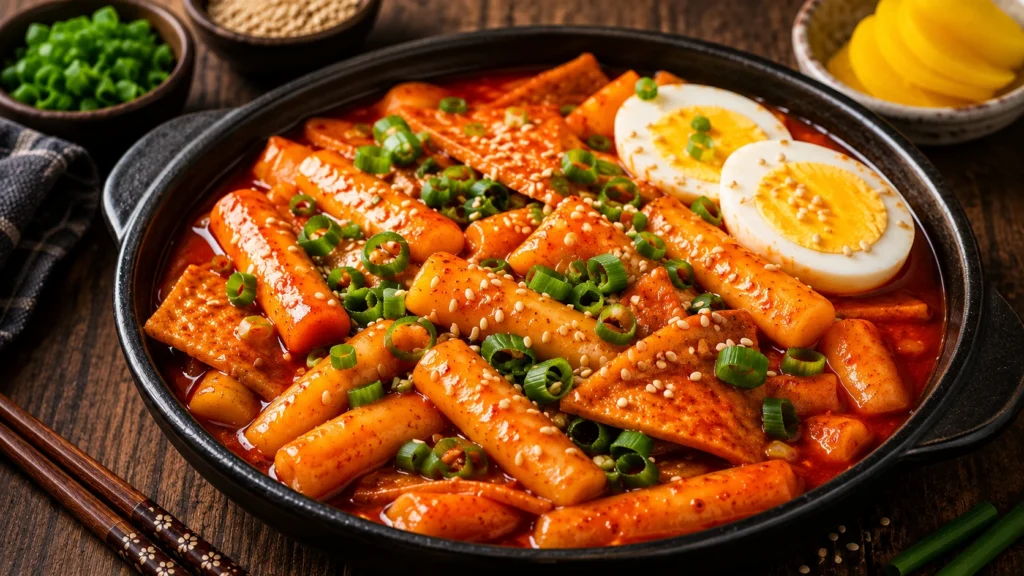
Chewy Korean rice cakes simmered in a spicy, sweet, and savory gochujang sauce.
When I first ordered a piping-hot bowl of tteokbokki from a vibrant street cart (pojangmacha) in Seoul years ago, I was instantly hooked by the incredible texture contrast. Biting through a soft, pillowy cylinder of Korean rice cake into a rich, fiery-sweet glossy sauce is an unforgettable culinary experience.
Tteokbokki (pronounced ttok-boh-kee) is undeniably one of Korea’s most beloved street foods and comfort snacks. The star of the dish is garae-tteok, dense, cylindrical rice cakes made from steamed rice flour, simmered gently until they absorb the savory depths of a fermented red chili paste broth.
Making an authentic, restaurant-quality version in your own home kitchen is surprisingly effortless. You don’t need years of Korean cooking experience or specialized equipment. With a few staple pantry items like gochujang, soy sauce, and Korean fish cakes, you can whip up this easy tteokbokki recipe in under 30 minutes.
Tteokbokki Recipe Card
| Recipe Information | Details |
| Recipe Name | Authentic Homemade Tteokbokki |
| Prep Time | 10 minutes |
| Cook Time | 20 minutes |
| Total Time | 30 minutes |
| Servings | 4 portions |
| Yield | 4 full serving bowls |
| Calories | 340 kcal per serving |
| Course | Main Dish / Snack |
| Cuisine | Korean |
| Method | Stovetop Simmering |
| Keywords | tteokbokki recipe, easy tteokbokki, Korean spicy rice cakes, gochujang rice cakes |
Why You’ll Love This Recipe
- Chewy and Flavorful Rice Cakes: Perfectly tender garae-tteok that absorb the savory sauce while maintaining their signature bouncy texture.
- Spicy, Sweet, and Savory Sauce: A balanced blend of fermented chili paste, sugar, and umami-rich soy sauce.
- Easy to Make at Home: Simple, straightforward steps that require zero advanced culinary skills.
- Ready in About 30 Minutes: Faster than ordering takeout, making it ideal for busy weeknights or midnight cravings.
- Uses Simple Ingredients: Available at any Asian grocery store or well-stocked local supermarket.
- Easy to Customize: Easily adjust the spice levels, sweetness, or add extra protein like boiled eggs and cheese.
- Great for Lunch, Dinner, or a Snack: A satisfying standalone meal or a fun sharing platter for movie night.
- Perfect Korean Street Food at Home: Recreates the genuine flavor profile of traditional Seoul street food carts.
Ingredients For Tteokbokki Recipe
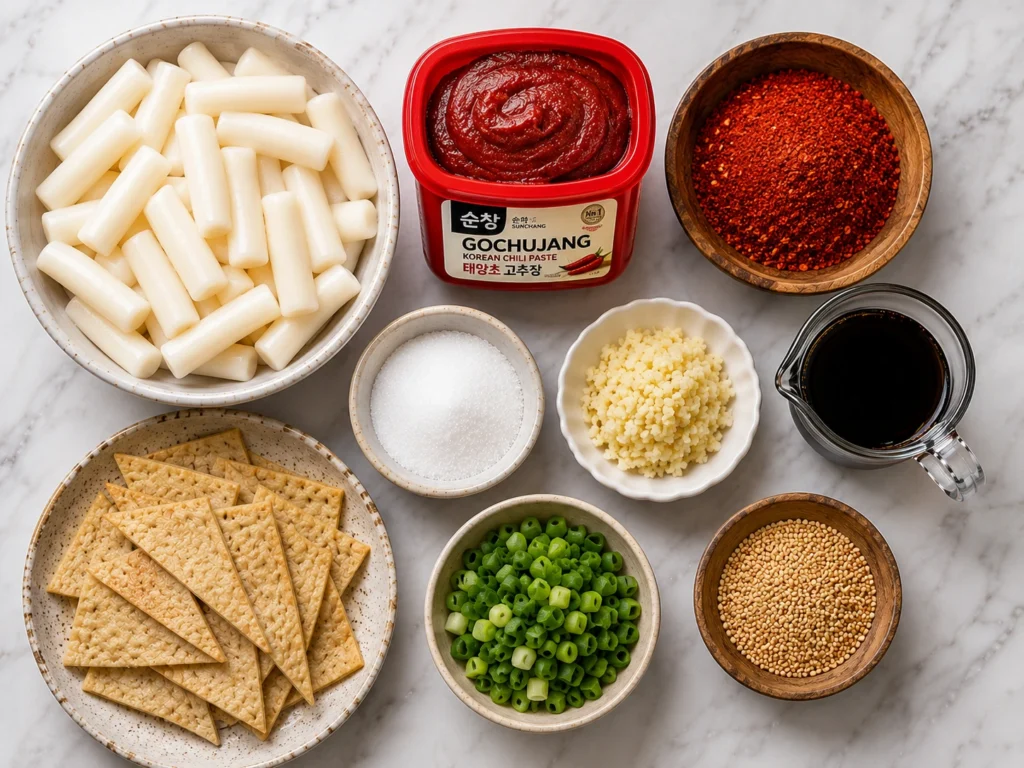
Main Ingredients
- 1 lb (450 g) cylindrical Korean rice cakes (garae-tteok)
- 2 sheets Korean fish cakes (eomuk or odeng), cut into bite-sized triangles
- 2 medium green onions, cut into 2-inch long pieces
- 2 ½ cups Korean anchovy-kelp broth (or water/vegetable broth)
- 2 hard-boiled eggs, peeled and halved (optional)
Tteokbokki Sauce
- 3 tablespoons Korean red chili paste (gochujang)
- 1 tablespoon Korean coarse red chili flakes (gochugaru)
- 1 tablespoon soy sauce
- 1 ½ tablespoons granulated sugar
- 1 tablespoon rice syrup or corn syrup (optional, for extra shine)
- 1 teaspoon minced garlic
Optional Toppings & Finishers
- 1 teaspoon toasted sesame oil
- 1 teaspoon toasted sesame seeds
- Finely sliced green onions
Ingredient Notes
Korean Rice Cakes (Garae-tteok)
Rice cakes are the foundation of this dish. They come in fresh, refrigerated, or frozen forms at Asian markets:
- Fresh Rice Cakes: Soft, pliable, and ready to toss directly into the simmering sauce without pre-soaking.
- Refrigerated or Frozen Rice Cakes: Tend to be firm and dry. Always soak them in a bowl of lukewarm water for 15 to 20 minutes before cooking. Soaking softens the outer starch layer, preventing the rice cakes from cracking or splitting open during simmering.
Gochujang (Korean Chili Paste)
Gochujang is a thick, fermented red chili paste made from chili powder, glutinous rice, fermented soybeans, and salt. It provides the signature dark red color, deep umami complexity, subtle sweetness, and fermented spicy baseline that defines authentic tteokbokki sauce.
Gochugaru (Korean Chili Flakes)
Gochugaru consists of sun-dried, coarsely ground Korean chili peppers. It provides vibrant crimson color and direct heat without adding extra liquid or thickness to the sauce. Adjust the gochugaru quantity up or down depending on your heat tolerance.
Korean Fish Cakes (Eomuk)
Thin, fried sheets of fish cake add a essential savory, ocean-depth note and a delightful bouncy contrast to the dense rice cakes. You can find them in the freezer aisle of Asian markets. If you prefer a fish-free version, simply omit them or swap in fried tofu slices.
Broth
While plain water works fine, using anchovy-kelp broth (dashi-style Korean stock) elevates the dish from good to restaurant-caliber. The natural glutamates in dried anchovies and dried kelp (dashima) provide a savory backbone that cuts through the sweetness of the chili paste.
Equipment Required for Tteokbokki
You only need a few standard kitchen tools to prepare this dish:
- Large Skillet or Wide Shallow Saucepan: Gives the rice cakes plenty of room to lie in a single layer so they cook evenly in the simmering broth.
- Mixing Bowl: For whisking the sauce ingredients and soaking frozen rice cakes.
- Wooden Spoon or Silicone Spatula: For gentle stirring without breaking the softening rice cakes.
- Measuring Spoons & Cups: For balancing the sweet, salty, and spicy ratios.
- Cutting Board & Knife: For prepping the green onions and fish cakes.
How to Make Tteokbokki
Step 1: Prepare the Rice Cakes
If using refrigerated or frozen Korean rice cakes, separate any stuck pieces and place them in a bowl of lukewarm water to soak for 15 to 20 minutes. Drain well before cooking. If using fresh, soft rice cakes, skip the soaking step.
Step 2: Make the Tteokbokki Sauce
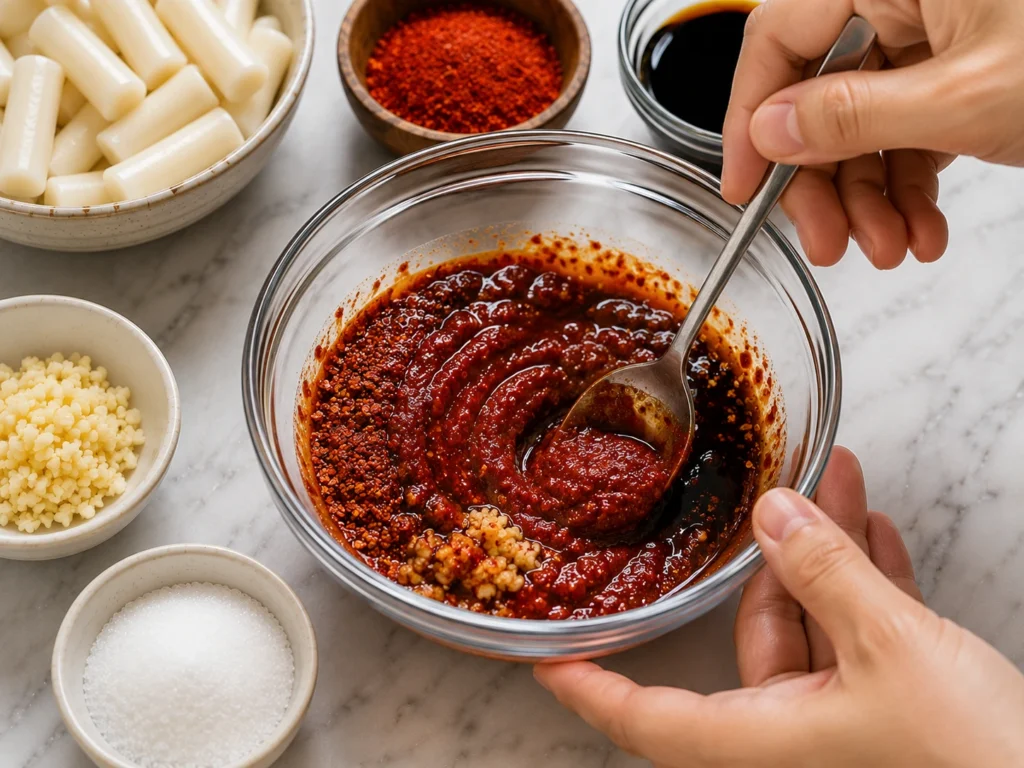
In a small mixing bowl, combine 3 tablespoons gochujang, 1 tablespoon gochugaru, 1 tablespoon soy sauce, 1 ½ tablespoons sugar, 1 tablespoon rice syrup (if using), and 1 teaspoon minced garlic. Whisk vigorously with a spoon until the paste is completely smooth and uniform.
Step 3: Bring the Broth to a Simmer
Pour 2 ½ cups of anchovy-kelp broth (or water) into a large skillet or wide saucepan. Set the burner to medium-high heat and bring the liquid to a gentle, steady rolling boil.
Step 4: Add the Sauce
Add the prepared tteokbokki sauce paste into the simmering broth. Stir with a wooden spoon for 1 to 2 minutes until the paste dissolves entirely into a smooth, red-hued broth.
Step 5: Add the Rice Cakes
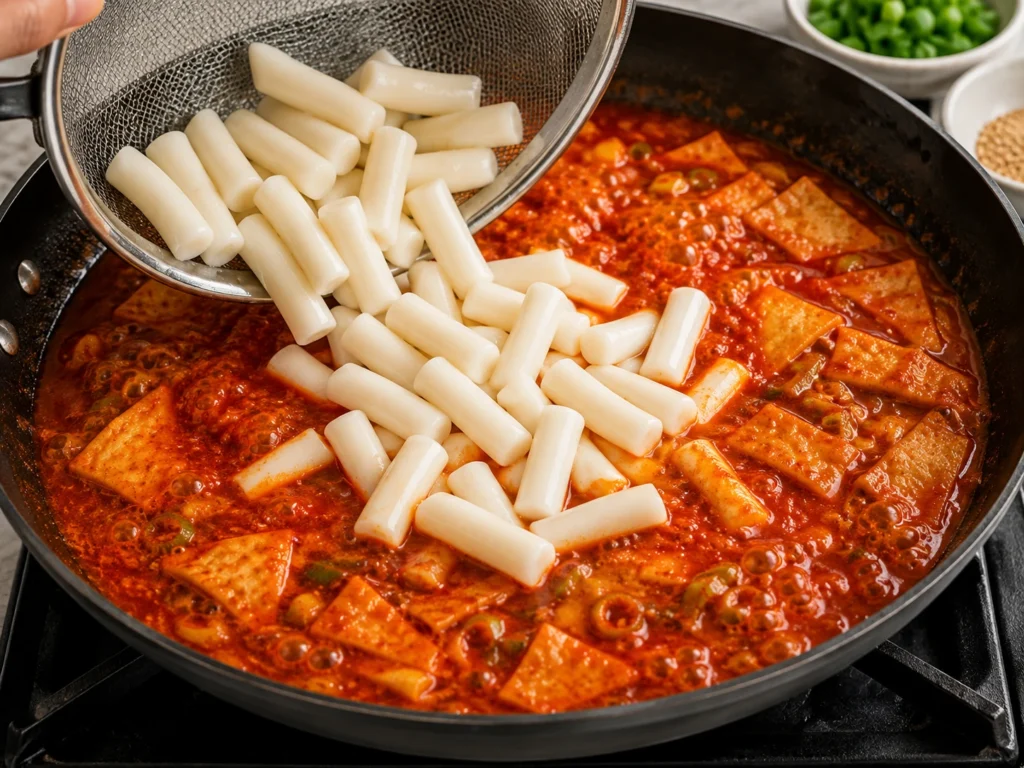
Gently add the soaked and drained rice cakes into the simmering sauce. Reduce heat slightly to medium and let the mixture simmer for 8 to 10 minutes, stirring frequently so the rice cakes don’t stick to the bottom of the pan.
Step 6: Add Fish Cakes & Boiled Eggs
Slide the cut triangle fish cakes and hard-boiled eggs into the pan. Continue to simmer over medium heat for another 5 to 7 minutes as the starch from the rice cakes naturally thickens the sauce.
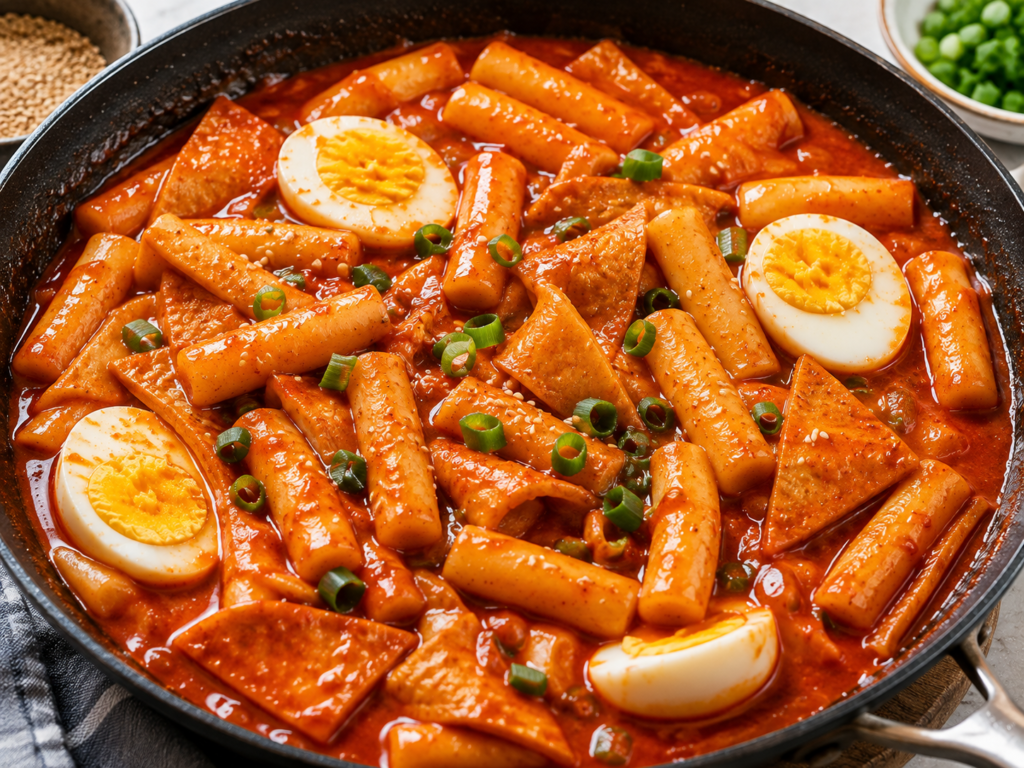
Step 7: Add Green Onions
Stir in the 2-inch green onion pieces during the final 2 minutes of cooking, allowing them to soften slightly while retaining their vibrant green color.
Step 8: Thicken the Sauce
Continue simmering until the sauce reaches a thick, glossy, glaze-like consistency that clings coated to the back of a wooden spoon and clings to every rice cake.
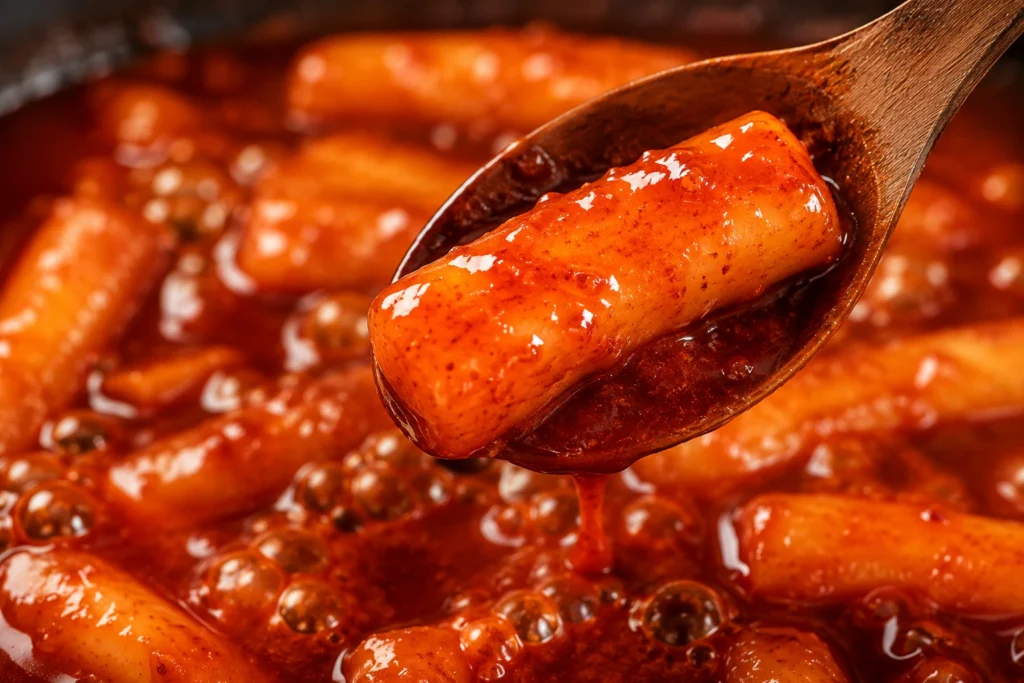
Step 9: Garnish and Serve
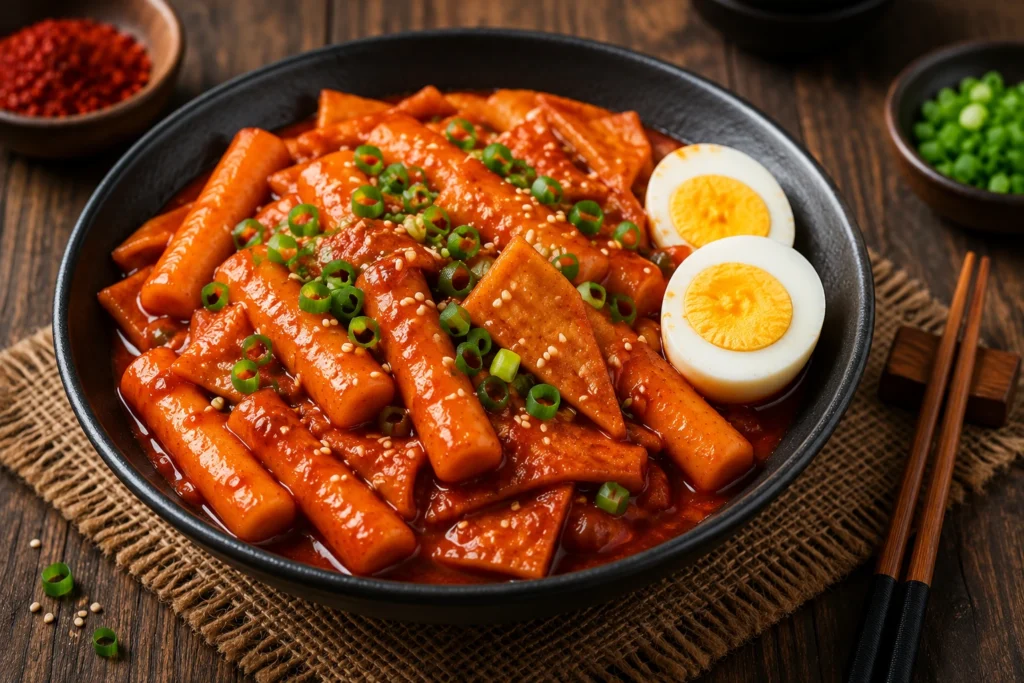
Drizzle with 1 teaspoon toasted sesame oil, and sprinkle generous amounts of toasted sesame seeds and chopped green onions on top. Serve immediately while hot!
What Does Tteokbokki Taste Like?
Tteokbokki is famous for its dynamic, multi-layered flavor profile that satisfies almost every tastebud simultaneously:
- Spicy: The initial hit of heat comes from the combination of gochujang and gochugaru chili flakes.
- Sweet: A balanced, background sweetness from sugar and rice syrup tames the raw fire of the peppers.
- Savory & Umami: Soy sauce, garlic, fish cakes, and anchovy stock add a rich, deep, brothy foundation.
- Slightly Smoky & Fermented: Gochujang adds a complex fermented depth that sets it apart from simple hot sauce.
- Bouncy & Chewy: The unique 쫀득쫀득 (jjondeuk-jjondeuk—chewy and elastic) texture of the steamed rice cakes provides a satisfying mouthfeel.
How Spicy Is Tteokbokki?
Traditional Korean street food tteokbokki has a moderate to high spice level that builds gradually as you eat. However, when making it at home, you have 100% control over the heat index:
- Mild (Kid-Friendly): Reduce gochujang to 1 ½ tablespoons, omit the gochugaru entirely, and add an extra ½ tablespoon of sugar or ketchup for sweetness.
- Medium (Standard Recipe): Follow the exact recipe quantities above for an authentic, balanced street-food kick.
- Spicy (Heat Seekers): Increase gochugaru to 2 tablespoons, or add 1 finely minced Korean red chili pepper (hong-gochu) or Cheongyang chili into the sauce.
Expert Tips for the Best Tteokbokki
- Don’t Boil Too Aggressively: Keep the stove on a gentle simmer. High, violent boiling causes the outer layer of the rice cakes to disintegrate before the core softens.
- Stir Frequently: Rice cakes are packed with starch and will easily stick and scorch on the bottom of your pan if left unattended.
- Adjust Sauce Before It Thickens: Taste the sauce halfway through simmering. Add a bit more sugar if it’s too spicy, or a splash of soy sauce if it needs salt.
- Use Authentic Korean Rice Cakes: Avoid western rice cakes or general mochi substitutes; they melt quickly. Look specifically for garae-tteok made for tteokbokki.
- Soak Frozen Rice Cakes: Skipping the soaking step for frozen rice cakes causes them to split down the middle while cooking.
- Add Boiled Eggs: Hard-boiled eggs are a classic addition! Mash the yolk into your leftover plate sauce at the end for a rich, creamy bite.
- Serve Immediately: Rice cakes begin absorbing liquid quickly as they cool. Serve straight from the stove for maximum chewiness.
Common Mistakes to Avoid
Why Is My Tteokbokki Too Thick or Dry?
If the sauce reduces too quickly before the rice cakes become tender, your burner heat was too high. Simply splash in ¼ cup of extra water or broth and turn down the heat.
Why Are My Rice Cakes Hard and Rubbery?
Hard rice cakes mean they were undercooked or weren’t soaked long enough before simmering. Cover the pan with a lid for 3 to 4 minutes to trap steam and soften the centers.
Why Is My Tteokbokki Too Spicy?
If you misjudged your heat tolerance, stir in 1 tablespoon of corn syrup, sugar, or a splash of heavy cream/milk to neutralize the capsaicin.
Why Is My Tteokbokki Sauce Too Thin and Watery?
If the sauce looks like soup, continue simmering uncovered over medium heat for an extra 3 to 5 minutes so excess water evaporates and starches render out.
Why Are My Rice Cakes Sticking Together?
Rice cakes stick if they aren’t separated before cooking. Always pull apart stuck individual cylinders while soaking them in water.
Delicious Tteokbokki Variations
- Cheese Tteokbokki: Scatter 1 cup of shredded mozzarella cheese over the top during the final 2 minutes of cooking. Cover the skillet with a lid until the cheese melts into a gooey, stretchy layer.
- Rose Tteokbokki: Replace 1 cup of the broth with heavy cream or whole milk. This creates a creamy, orange-hued, milder sauce that has swept across Korean food trends.
- Rabokki (Ramen + Tteokbokki): Add 1 block of instant ramen noodles and an extra cup of broth into the pan alongside the rice cakes for the ultimate noodle-and-rice-cake mashup.
- Seafood Tteokbokki: Toss in peeled shrimp, squid rings, or mussels during the last 5 minutes of cooking for a coastal street food spin.
- Vegetable Tteokbokki: Add sliced white cabbage, shiitake mushrooms, shredded carrots, and onion slices for extra crunch and nutrition.
- Vegan Tteokbokki: Use vegetable broth instead of anchovy stock, replace fish cakes with fried tofu puffs (aburaage) or king oyster mushrooms, and ensure your gochujang brand is vegan-certified.
What to Serve With Tteokbokki
Complete your Korean street food feast by pairing tteokbokki with these complementary dishes:
- Korean Fried Chicken: Crisp, double-fried chicken coated in soy garlic or spicy glaze.
- Kimbap (Korean Seaweed Rice Rolls): Dip slices of vegetable or beef kimbap directly into the leftover tteokbokki sauce!
- Korean Dumplings (Mandu): Pan-fried or steamed pork and vegetable dumplings.
- Korean Fish Cake Soup (Eomuk Tang): Warm fish cake skewers served in a clear, soothing radish broth.
- Pickled Yellow Radish (Danmuji): Sweet, crunchy yellow radish slices that instantly cleanse the palate from spicy heat.
- Korean Cucumber Salad: Chilled, sesame-marinated cucumber slices.
How to Store and Reheat Tteokbokki
Refrigerator Storage
Transfer leftover tteokbokki into an airtight container and refrigerate promptly for up to 3 days. Note that as the dish cools, the rice cakes will naturally absorb the remaining sauce and firm up into hard cylinders.
How to Reheat Tteokbokki
Never eat cold leftover tteokbokki! The rice cakes must be reheated to regain their chewy texture:
- Transfer leftovers into a small skillet or saucepan.
- Add 3 to 4 tablespoons of water or broth to loosen the gelled sauce.
- Reheat gently over medium-low heat for 5 to 7 minutes, stirring occasionally, until the sauce bubbles and the rice cakes become soft and pliable again.
Can You Freeze Tteokbokki?
Freezing cooked tteokbokki is not recommended. Freezing alters the cellular structure of cooked rice flour cakes, causing them to turn mushy, crumbly, and watery upon thawing. It is best enjoyed fresh or stored in the fridge for short-term consumption.
Make-Ahead Tips
- Prepare Sauce in Advance: You can whisk the sauce paste ingredients together and store them in a sealed jar in the fridge for up to 2 weeks.
- Chop Ingredients Ahead: Slice green onions and fish cakes 1 to 2 days prior and store them in zip-top bags in your crisper drawer.
- Cook Fresh for Best Texture: While prep can be done ahead, always cook the rice cakes right before serving to guarantee that irresistible, fresh jjondeuk-jjondeuk chewiness!
Nutrition Information
Calculated from recipe quantities without optional toppings.
| Nutrient | Amount Per Serving (1/4th recipe) |
| Calories | 340 kcal |
| Total Carbohydrates | 68 g |
| Dietary Fiber | 4 g |
| Sugars | 12 g |
| Protein | 9 g |
| Total Fat | 3.5 g |
| Saturated Fat | 0.8 g |
| Sodium | 780 mg |
Frequently Asked Questions
What is tteokbokki?
Tteokbokki is a popular Korean dish made from cylindrical rice cakes simmered in a sweet, spicy gochujang-based sauce, often accompanied by fish cakes and boiled eggs.
What does tteokbokki mean?
The word is a combination of tteok (rice cake) and bokki (stir-fried/simmered). It literally translates to “stir-fried rice cakes.”
What are tteokbokki rice cakes made from?
Traditional garae-tteok are made from short-grain rice flour, water, and salt. The mixture is steamed, kneaded into a dense dough, and rolled into smooth cylinders.
Can I make tteokbokki without fish cakes?
Yes! Fish cakes add savory flavor, but they are entirely optional. You can substitute them with fried tofu, mushrooms, cabbage, or simply omit them.
Can I use frozen rice cakes?
Yes! Just be sure to soak frozen rice cakes in lukewarm water for 15 to 20 minutes before adding them to your hot broth so they cook evenly without splitting.
Do I need to soak Korean rice cakes?
If your rice cakes are fresh and soft, no soaking is needed. If they are refrigerated or frozen hard, soaking is essential to restore moisture before cooking.
Can I make tteokbokki less spicy?
Yes! Reduce the gochujang to 1 ½ tablespoons, skip the gochugaru chili flakes, and add a little extra sugar or tomato ketchup to mild out the sauce.
Can I make tteokbokki without gochujang?
Gochujang is the core flavor base of traditional tteokbokki. While non-spicy historical versions (Gungjung Tteokbokki) use soy sauce and beef, you cannot recreate red tteokbokki accurately without gochujang.
Tteokbokki vs. Other Korean Rice Cake Dishes
| Feature | Tteokbokki | Gungjung Tteokbokki | Rabokki | Rose Tteokbokki |
| Primary Sauce Base | Gochujang & Gochugaru | Soy sauce & Sesame oil | Gochujang broth | Gochujang & Cream/Milk |
| Flavor Profile | Spicy, sweet, savory | Savory, sweet, non-spicy | Spicy & sweet | Creamy, mild, rich |
| Key Addition | Fish cakes & boiled eggs | Beef & colorful bell peppers | Instant ramen noodles | Cheese or bacon bits |
| Historical Origin | Modern street food classic | Royal court historic dish | Modern fusion street snack | Recent viral trend |
Pro Tips
- Use a Scale or Measuring Spoons: Balancing the sweet-to-spicy ratio of gochujang and sugar is key to getting authentic Korean street flavor.
- Don’t Skip the Green Onions: Green onions add a fresh, aromatic crunch that cuts through the rich, sticky sauce.
- Garnish with Toasted Sesame Oil: Swirling in a teaspoon of toasted sesame oil right off the heat gives your sauce a glossy sheen and a warm, nutty finish.
- Keep Extra Stock Nearby: If chatting with guests delays dinner, the sauce will keep reducing. Have a quarter-cup of warm water ready to loosen the pan sauce before plating.
Related Recipes
Expand your Korean cooking repertoire with these recipes: